
When you're preparing to start a business, there are so many moments where you feel lost -- what should I do first? Where should I spend my time and money?
Especially these days, with the boom in startups and side projects, I think everyone has at least thought "maybe I should give it a shot?" at some point.
I once had the chance to attend a talk by Manager Lee Seung-ah from Blue Point Partners about what you absolutely must do and what you should never do when starting a business. I've put together a summary of that talk here.
You might have different opinions on some of this, but I hope this post gives you a chance to develop your own thinking further.
If you're considering starting a business, definitely give this a read!
What You Must Do When Starting a Business#
1. Validate that your product/service is actually needed in the market#
This is the most important thing. If you nail this, you can act without hesitation and easily connect with potential customers.
It's not just about people saying "it would be nice to have" -- you need to verify that they'd actually pay money to use it.
This is called PMF (Product Market Fit), and getting this right is what creates the potential for your business to grow.
2. Create a Lean Canvas#
This is an incredibly useful tool for organizing and validating your ideas.
Fill one out like the template below with the details for the item you've decided to pursue.
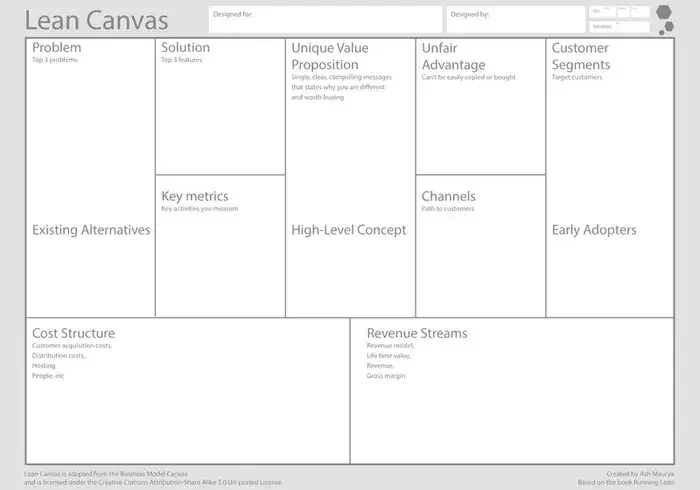
- Problem: 1-3 key problems your customers face
- Existing Alternatives: Current solutions for each problem
- Customer Segments: Your main target customers
- Early Adopters: Your ideal customer profile
- Unique Value Proposition: A single sentence that draws customers in
- Solution: The product/service that solves the problem
- Channels: How you'll reach your customers
- Revenue Streams: How you'll make money
- Cost Structure: What costs are involved
- Key Metrics: Numbers that measure success
- Unfair Advantage: Strengths that competitors can't easily replicate
3. Build an MVP (Minimum Viable Product)#
You don't need to make your product perfect from the start.
Just build something small, show it to customers, see their reactions, and iterate. That's way more important.
Try asking your customers this question:
"If you could no longer use this product, how disappointed would you be?"
- Very disappointed
- Somewhat disappointed
- Not disappointed
If you're getting a lot of "Very disappointed" responses, you're getting close to PMF.
Repeat the cycle: Launch MVP -> Check customer reactions -> Revise & improve.
What You Should NOT Do When Starting a Business#
1. Don't spend a lot on fixed costs from the start#
Office space, expensive equipment, full-time hires -- these can actually be risks in the early stage.
Use government-supported spaces, startup centers, or co-working offices instead. For talent, try working with freelancers, side hustlers, or side project teams rather than full-time hires.
Being flexible like this in the early days is much better for operations.
2. Actively leverage startup support programs and hackathons#
These days, VCs and institutions offer all kinds of programs:
- Programs for aspiring entrepreneurs
- Initial funding just from idea pitching
- Team building & idea realization within a set timeframe
Use these to meet people, validate your ideas, and build your team.
Early team members are truly precious, and many great partnerships start from these events.
Look for people whose interests align well with yours based on your own criteria.
Finding someone who'll stick with you through the entire business journey is one of life's important moments.
Wrapping Up#
Starting a business isn't easy, but proper preparation lets you take on the challenge much more safely.
In one line: Start small, validate fast, and stay flexible.
If you're thinking about starting a business or brainstorming a side project, why not try creating your own Lean Canvas based on what you've read today? I'd also recommend searching online if you need more detailed explanations.
Simply put, you believer that things or people make you unhappy, but this is not accurate. You make yourself unhappy.
— Wayne Dyer