Watch the Lectures#
Lisa Randall - Extra Dimensions and Dark Matter
- Lecture 1 Invisible Dimensions
- Lecture 2 The Problem of Scale
- Lecture 3 Finding New Particles
- Lecture 4 The Unsung Hero: Dark Matter
- Lecture 5 Matter and Mass Extinction
Lecture 1: Invisible Dimensions#
Lecture 1 - Invisible Dimensions: A Harvard University physics professor who drew worldwide attention with the 1999 paper "Warped Extra Dimensions." The 'Randall-Sundrum model' is highly regarded as a clue to solving the challenges of modern theoretical physics, particularly the hierarchy problem of the Standard Model. Extra dimensions that influence the universe exist. How can we imagine higher-dimensional worlds beyond our imagination? Why did physicists come up with such a complex and seemingly absurd concept as extra dimensions? Let's explore the extra dimensions that Lisa Randall describes.
It's a challenging topic, but my colleagues and I are researching to uncover the secrets of the 'hidden dimensions of the universe.' Hidden dimensions is a figurative expression, but they could actually be real. I can't be certain that all the theories I'll share will turn out to be true. But let me explain why we came up with these theories and how we can test them.

The reason I focus on extra dimensions is because it's a physically plausible concept. It's related to the nature of spacetime. We're accustomed to 3-dimensional space with left-right, front-back, and up-down. But extra dimensions that are infinitely large yet invisible to us could also exist.
This world we think of as 3-dimensional might actually be just part of the universe. I like to think of this as an extension of the Copernican Revolution — since humans don't need to be at the center of the universe, what we see might not be all the dimensions of the universe. In other words, even though they might be hidden, there could be things that influence this visible world.
Let me give a few reasons why extra dimensions are worth considering. First, there's string theory. We don't yet know what strings are or how they work. But what we hypothesize is that the fundamental building blocks of our world are vibrating strings. For this string theory — which unifies quantum mechanics and gravity — to work, extra dimensions must exist in the universe.
We don't know why 4-dimensional spacetime exists. 4-dimensional spacetime means 3 dimensions of space plus 1 dimension of time. There's no physical law anywhere that says the universe must have exactly 4 dimensions. If space isn't limited to 3 dimensions, gravity theory would yield different results.
We think that beyond 4-dimensional space, additional dimensions could exist. Those dimensions might be curled up and hidden. You might ask "if we can't see them, why does it matter?" As with all science, the history of physics is made up of discoveries in realms invisible to us. Everything we know today is like that. We take atoms, nuclei, and things inside nuclei for granted, but 200 years ago nobody knew they existed. But by using higher energies to study the microscopic world, we've learned about hidden things.
Lecture 1 Summary#
Why focus on extra dimensions
Physical possibility, theoretical consistency, connection to existing research.
-> More dimensions may exist and influence our universe.
Extra dimensions
- Related to the nature of spacetime
- Additional dimensions beyond 3D space may exist
- Even beings confined to 3 dimensions can interact through extra dimensions
- Gravity can travel through extra dimensions
String theory
- A theory that unifies quantum mechanics and gravity
- No reason only 4-dimensional spacetime must exist
- Difficulty understanding the Standard Model
Prerequisites for string theory
- Extra dimensions must be proven
- Only appear in 4-dimensional high-energy states
- Cannot be confirmed in everyday life
4 fundamental forces in nature
Gravity, electromagnetism, strong force, weak force
Warped Gravity
- Gravity existing in a specially curved 5-dimensional spacetime
Lecture 2: The Problem of Scale#
Lecture 2 - The Problem of Scale: A Harvard University physics professor who drew worldwide attention with the 1999 paper "Warped Extra Dimensions." The 'Randall-Sundrum model' is highly regarded as a clue to solving modern theoretical physics challenges, particularly the hierarchy problem. What do we know and what don't we know? Is there a way to understand the unknown based on what we know? Before answering these big questions, Professor Lisa Randall focuses on the concept of 'scale.' Why is scale — also translated as size or scope — important? From the largest scale to the smallest! After touring the world of scale, we learn about the Large Hadron Collider, which studies the smallest observable scale today.
In this lecture, I'll continue the discussion about the fundamentals of physics and explore how we can expand our thinking about extra dimensions. I'm focused on the idea of extra dimensions as a way to understand the current universe. I'd like you to think about how this concept can help you go beyond current frameworks of thought.

Let me talk about what could happen at scales we can't observe. First, think about photographs. There's something I'd like you to keep in mind when looking at photos: 'resolution' matters. What you see depends on how closely you look.
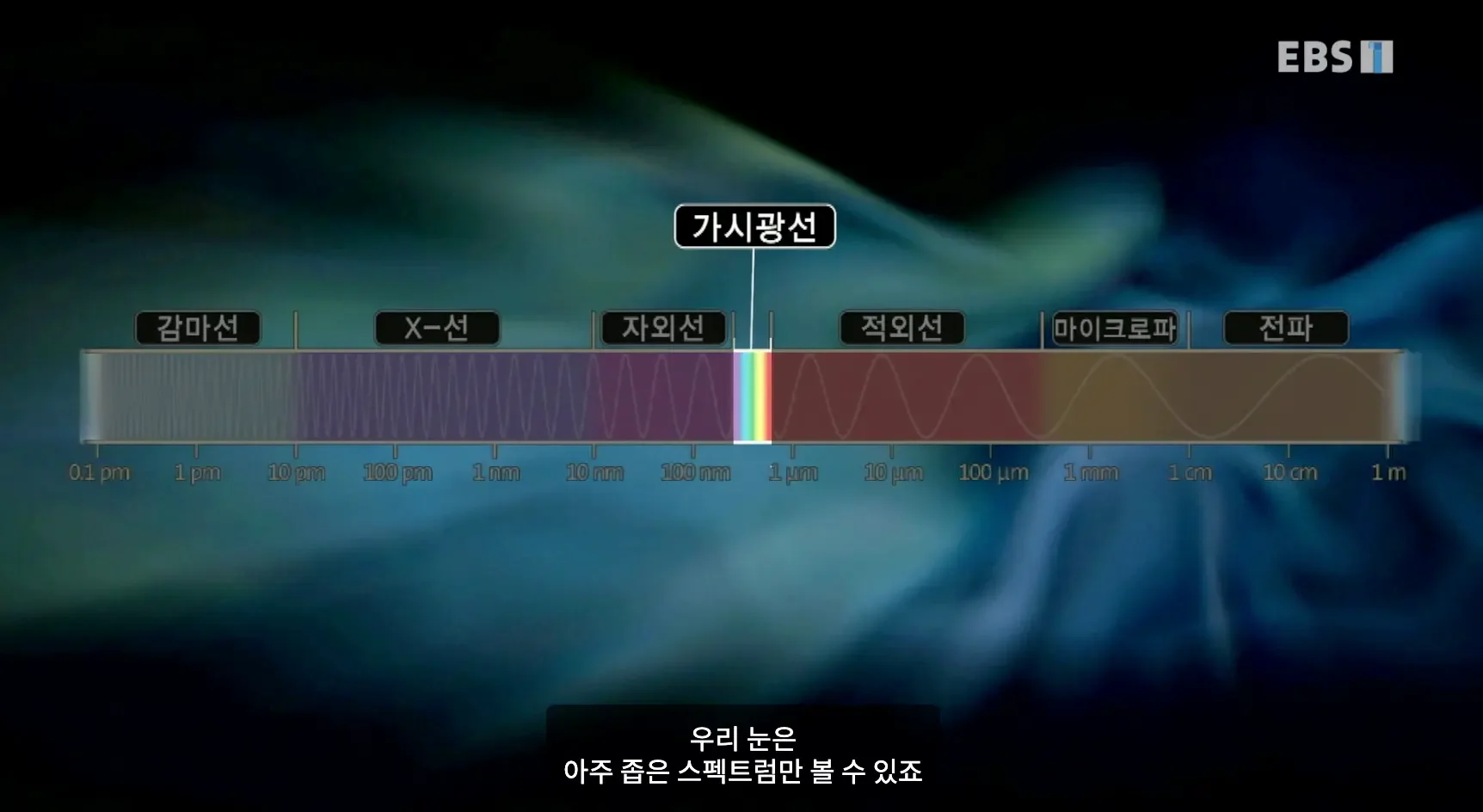
This is an analogy for how physics works. If something is too small to observe, we need to somehow develop investigative tools to see the 'small domain' that was previously invisible. I want to emphasize that the only way to know for certain what exists is to see it. We've developed tools to see things at different scales, from the universe to red blood cells. Physics has continuously advanced through this kind of research.
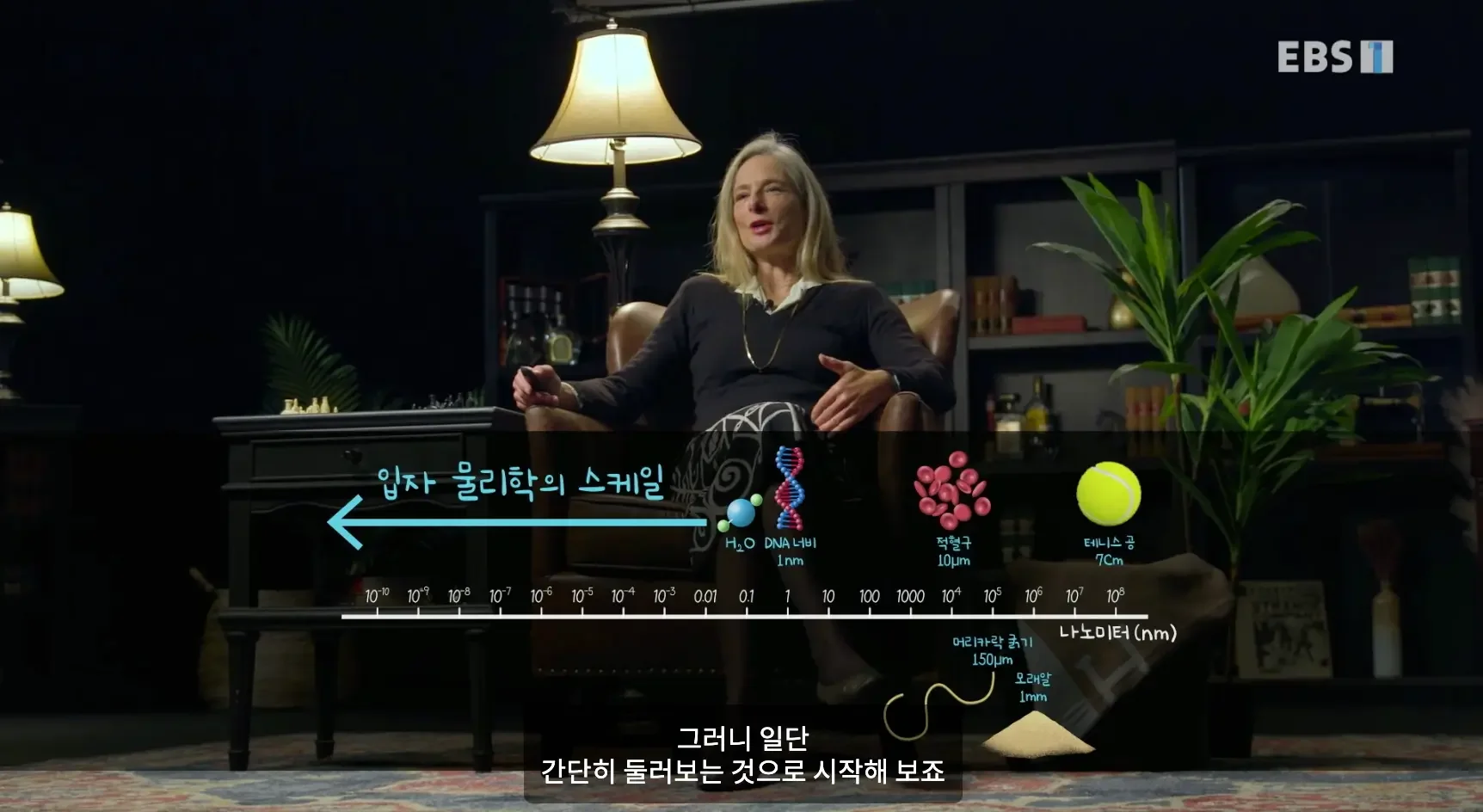
Our understanding of the universe depends on how we observe it and how far we can observe. The Large Hadron Collider observes up to the limits of today's observable scale — it's a circular tunnel 27km in circumference buried underground. Inside, protons are accelerated and collided at high energies. We hope that particles that can't exist at low natural energies will be created when protons collide with each other.
You know E=mc², right? To create particles with larger mass m, you need higher energy E. So these high-energy particle accelerators allow us to study heavier particles.
I love this metaphor from effective theories. Imagine someone living in an extra dimension and someone living in a 3-dimensional world. How would they see the same world differently? You can only find out by going beyond our reality. It could be extra dimensions, so we need to research further.
Lecture 2 Summary#
Extra Dimensions (Extra Dimension)
- Dimensions beyond 4-dimensional spacetime
- Dimensions that cannot be perceived through our senses
- Keys to transcending current frameworks of thought
- An unobservable world, understandable based on what we currently know
Scale
- Resolution -> influences our thinking
- Same physics laws apply regardless of scale
- Different scales require different explanatory methods -> Quantum mechanics applies at the atomic scale
Quantum mechanics
- The subatomic world discovered in the early 20th century
- Atoms > Nuclei > Protons, Neutrons > Quarks
Elementary Particle
- The most fundamental particles that make up other particles
Large Hadron Collider (LHC, Large Hadron Collider)
- A device that accelerates protons to the highest energy humans can achieve and collides them
- New particles can be created when protons collide at high energies
- With high enough energy, even microscopic domains can be observed
Effective theory
- A theory that describes measurable particles and forces at the specific scale where the theory applies
- The ultimate theory underlying effective theories remains incomplete
Standard Model (Standard Model)
- An effective theory that describes all known particles and their interactions
- Experimentally verified in the 1980s
Lecture 3: Finding New Particles#
Lecture 3 - Finding New Particles: A Harvard University physics professor who drew worldwide attention with the 1999 paper "Warped Extra Dimensions." The 'Randall-Sundrum model' is highly regarded as a clue to solving modern theoretical physics challenges, particularly the hierarchy problem. What is the goal of the Large Hadron Collider that uses high energies? One of them is to find a particle that solves the 'hierarchy problem of the Standard Model,' a major challenge in modern physics. It's closely related to the 'Higgs boson,' which made headlines in 2012 with the nickname 'the God particle.' We found the Higgs boson, which proves the mechanism that gives matter mass, but now the mass of the Higgs boson itself is the problem. What other particles must we find? How can we possibly find them?
We still don't know what lies beyond what we can directly observe. In the 20th century, many new elementary particles were discovered. These are the smallest units that can no longer be divided.

There are 4 fundamental forces in nature: gravity, electromagnetism, the weak force, and the strong force. These are forces — interactions between matter. So what matter are we talking about? Some things interact with the strong force and some don't. Those that do are called hadrons, and those that don't are called leptons. Leptons are similar to electrons but slightly heavier particles.
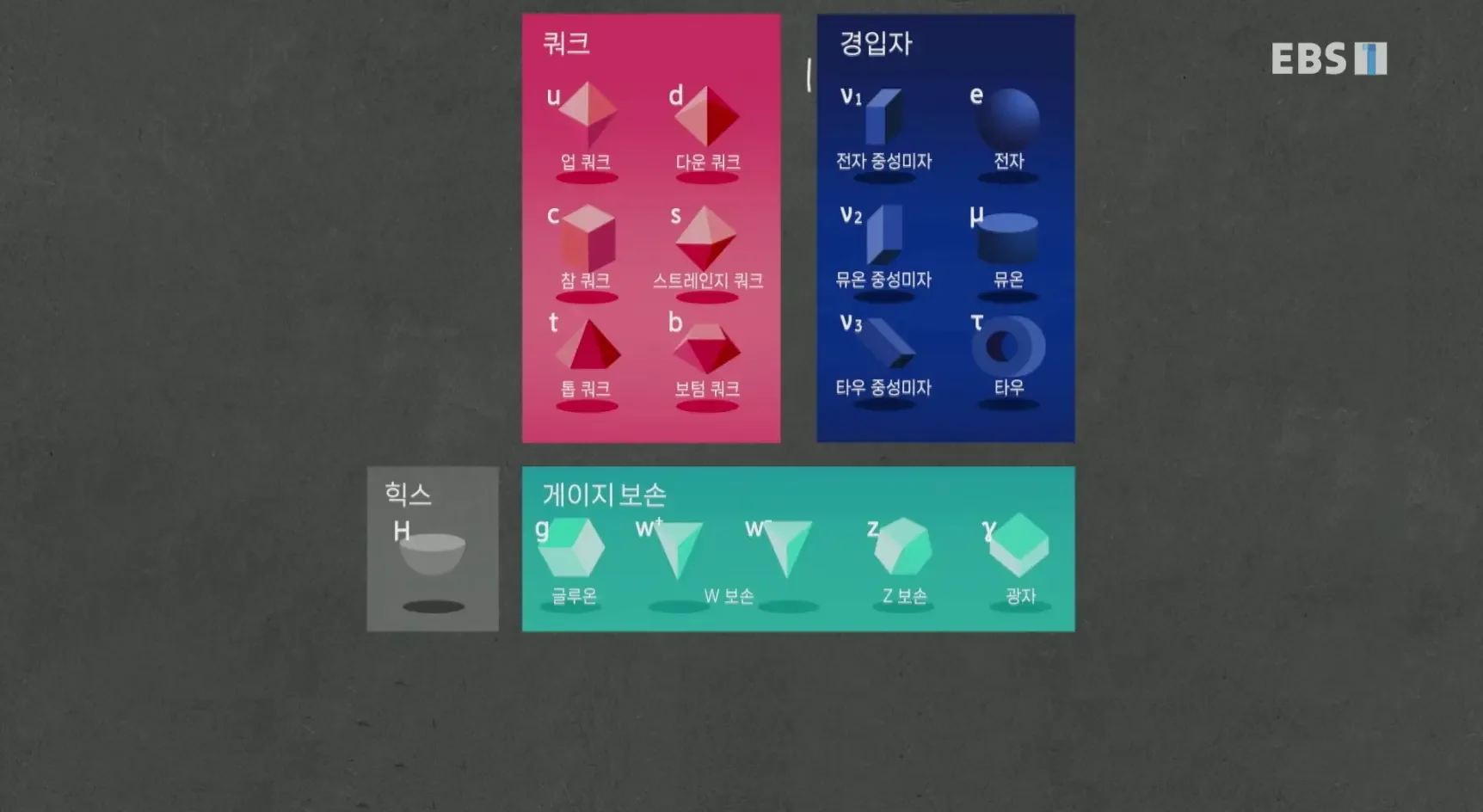
With the discovery of the Higgs boson, we gained great insight into how particles acquire mass. The Higgs mechanism explains how elementary particles get their mass. Simply put, the universe is filled with the Higgs field. Other particles interact with this Higgs field and thereby acquire mass.
According to quantum field theory calculations — which combine quantum mechanics and relativity — mass should be much larger than the actually observed value. This discrepancy suggests that our established theories may be incomplete. Scientists call this the hierarchy problem. The hierarchy problem has been central to particle physics for decades. People think there's a great mystery. The Standard Model worked perfectly and discovering the Higgs boson explained everything.
We don't know why the mass is small. We just assume the parameter values are correct and use them. So I'd like to try explaining extra dimensions. Since we haven't seen experimental evidence, I can't tell you my theory is right.
In extra dimensions, there are two branes — two brane-worlds. One is called the gravity brane, and the other is called the weak brane. Let's start with the weak brane. A brane can trap things. We might be living trapped on the weak brane. In other words, a 4th spatial dimension might exist, but the entire universe could be trapped on a 3-dimensional brane.
In our theoretical framework, gravity is concentrated on the gravity brane. That is, we feel gravity in a 3-dimensional world away from the gravity brane. Wherever you are, if you're not on the gravity brane, gravity is weak and therefore mass is small. To verify this theory, we need Kaluza-Klein particles. These particles exist in the extra-dimensional world and can be found with the Large Hadron Collider (LHC).
Lecture 3 Summary#
Elementary particles
- The smallest matter that can no longer be split
- The most fundamental particles that make up other particles
Quarks (Quark)
- Fundamental particles that make up hadrons; 3 quarks form a proton or neutron
Strong Force (Strong Force)
- The force that binds quarks together inside protons and neutrons
Higgs Boson (Higgs Boson)
- One of the fundamental particles proposed by the Standard Model
Higgs Mechanism (Higgs Mechanism)
- The process by which elementary particles acquire mass in quantum theory
Challenge of modern physics
- The hierarchy problem (the discrepancy between calculated mass and observed mass)
Gravity
- Another way to understand the hierarchy problem
Randall-Sundrum Model -> Size, mass, and gravity all change with extra dimensions -> If extra dimensions exist, weak gravity and the hierarchy problem can be explained
- A physical model of a specially curved 5-dimensional spacetime
- The position of gravity changes with position in the extra dimension
- The hypothesis that gravity and mass weaken away from the gravity brane
- Testable at the Higgs boson and elementary particle scale
Lecture 4: The Unsung Hero — Dark Matter#
Lecture 4 - The Unsung Hero, Dark Matter: A Harvard University physics professor who drew worldwide attention with the 1999 paper "Warped Extra Dimensions." The 'Randall-Sundrum model' is highly regarded as a clue to solving modern theoretical physics challenges, particularly the hierarchy problem. Several things suggest the existence of dark matter. Professor Lisa Randall, who sides with dark matter 'existing,' introduces various methods of observing dark matter and highlights its importance.
In this lecture, I'll look beyond the Standard Model world of matter to explore what else might be out there in the universe. We'll examine the universe from a particle physicist's perspective.

I emphasize the amazing interconnectedness of the universe — how many events in cosmic history affect us today. Let's start with what I call the cosmic pie. The cosmic pie represents the energy distribution of the entire universe. Ordinary matter made of atoms accounts for only about 5% of the universe's energy.

Dark matter is 5 times more than that. Dark matter is real matter. You can see it interacts with gravity — it's just a clump of matter. But it doesn't interact with light. On top of that, most of the universe's energy is in the form of dark energy. Dark energy is energy spread throughout the entire universe — it's not clumped up like matter. When we observed the accelerating expansion of the universe, we realized that dark energy was causing this acceleration.
The individual particle that makes up dark matter hasn't been identified yet. So how do we know dark matter exists? We can't see dark matter directly, but we've observed its effects. The first thing that made us believe dark matter really exists is galaxy rotation curves — how stars rotate in galaxies. Scientists who observed how stars in a galaxy rotate as a function of distance from the galactic center found that ordinary matter alone couldn't produce such rotation — gravity wouldn't be sufficient and objects would fly out of the galaxy.
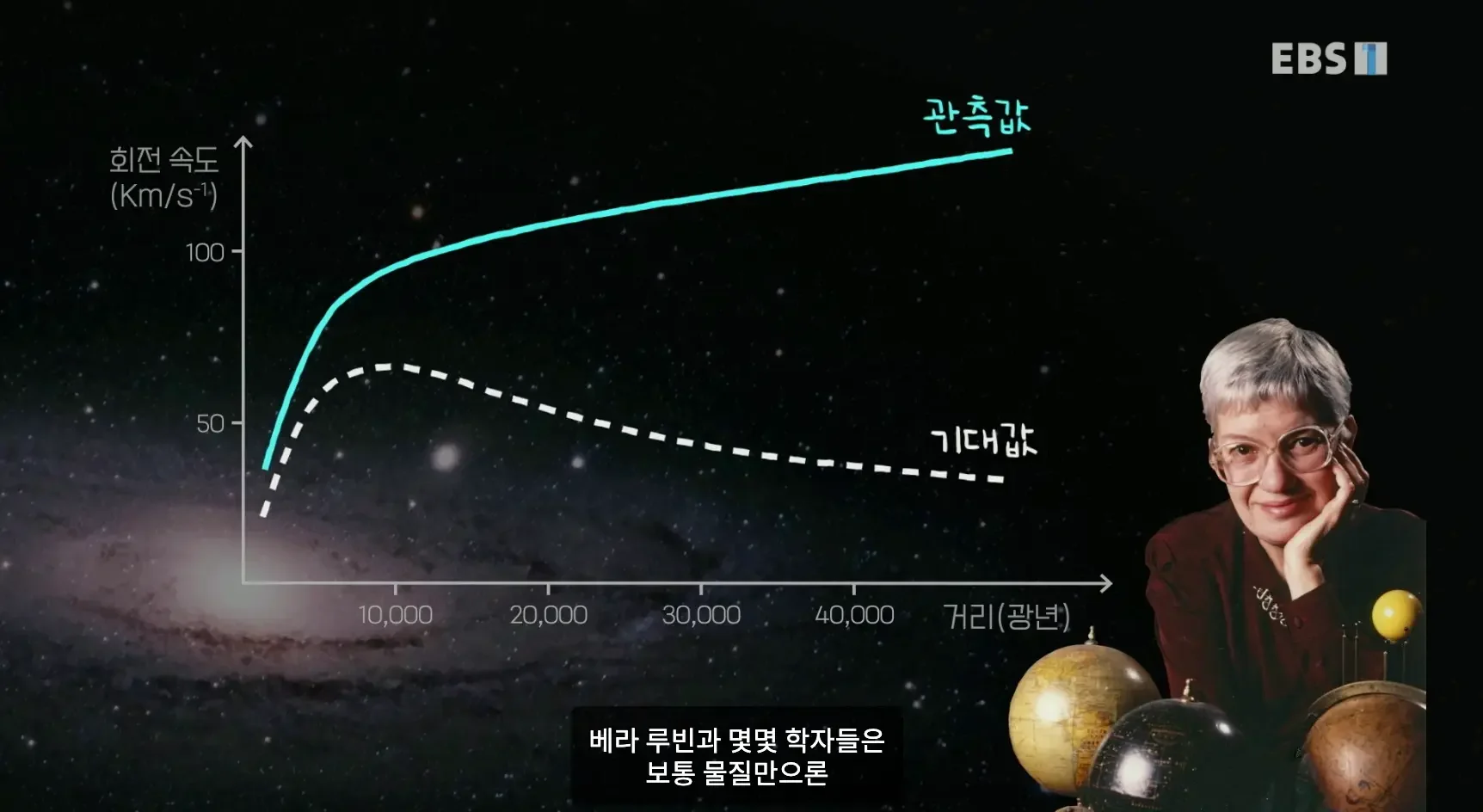
Galaxy clusters — groups of galaxies bound by gravity — also showed evidence of dark matter's influence. They were moving at speeds faster than what ordinary matter alone could produce. To explain these speeds, there had to be additional matter beyond what we observed. The cosmic microwave background radiation also tells us about the existence of dark matter.
There's something called gravitational lensing by dark matter — another way to track where dark matter is. The Bullet Cluster is also a clue that dark matter exists. The Bullet Cluster appears to be two galaxy clusters that merged together. When two or more of these clusters come close together, gases interact and clump in the center. Dark matter, on the other hand, passes right through.
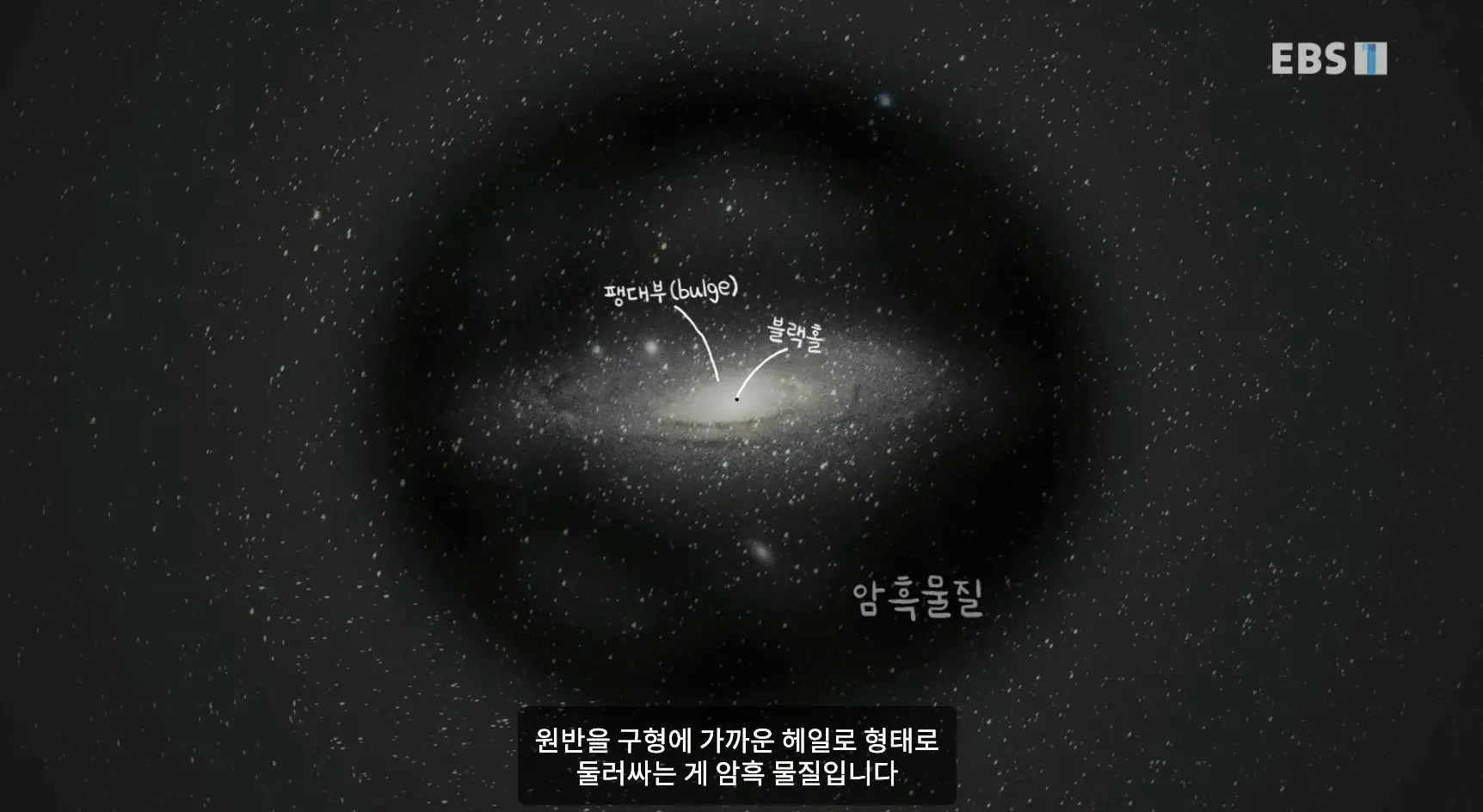
Dark matter actually contributed to the formation of galaxies the size of our Milky Way throughout the life of the universe. As dark matter collapsed, it created the scaffolding for the universe's structure, upon which ordinary matter then settled. So dark matter is essential for galaxy formation. It played a crucial role despite going unrecognized.
Lecture 4 Summary#
Cosmic Pie (Cosmic Pie)
- The energy distribution of the universe represented as a pie chart
Dark energy
- Hypothetical energy estimated to be distributed throughout the entire universe
Dark matter
- Interacts with gravity, does not interact with light
- Likely not a Standard Model particle
- No interaction with the Standard Model (electromagnetism, weak force, strong force)
- Cannot see dark matter directly, but its effects are observable
- Contributed to galaxy formation -> Generates sufficient gravity for galaxy structure
- Without dark matter, galaxy structures would disperse
Evidence for dark matter
- Galaxy rotation curves
- Cosmic Microwave Background (Cosmic Microwave Background)
- Microwave electromagnetic radiation uniformly filling the observable universe
- Cosmic background radiation that tells us the amount of dark matter
- Gravitational lensing effect
- Tracking dark matter's location through gravitational lensing observations
- Bullet Cluster
- A galaxy cluster formed by the merger of at least 2 galaxy clusters
Except for gravity, dark matter and ordinary matter do not interact
Ordinary matter + Ordinary matter -> Interaction O
Dark matter + Dark matter -> Interaction X
Today's Earth
- Dark matter collapse (creates gravity) -> Ordinary matter collapse -> Galaxy formation
Lecture 5: Matter and Mass Extinction#
Lecture 5 - Dark Matter and Mass Extinction: A Harvard University physics professor who drew worldwide attention with the 1999 paper "Warped Extra Dimensions." The 'Randall-Sundrum model' is highly regarded as a clue to solving modern theoretical physics challenges, particularly the hierarchy problem. While researching the properties of dark matter, Lisa Randall and fellow scholars came up with an intriguing hypothesis. According to conventional theory, dark matter doesn't interact with ordinary matter except through gravity. But what if dark matter interacts with itself? If it does interact with itself, what would happen? Following this chain of thought, the destination was the extinction of the dinosaurs. How is that possible?
Besides particle physics, I'm also researching cosmology, particularly dark matter. Why do I research dark matter? Because I'm convinced it exists, making it a perfect research subject. It's uncertain, but I'll assume dark matter is composed of elementary particles.

Some of you may have heard of WIMPs — Weakly Interacting Massive Particles. For a long time, there was a vague assumption that WIMPs might be dark matter. In principle, WIMPs are particles closely related to the Standard Model of particle physics. WIMPs haven't been found yet, and while they're still a viable candidate, we need to be more specific about their properties.
What I'm actually doing with dark matter research is model building — finding possibilities for how we can explain the phenomena we observe. I believe we should consider a wide range of theories as long as they can be tested experimentally. I just hope we find the right one.
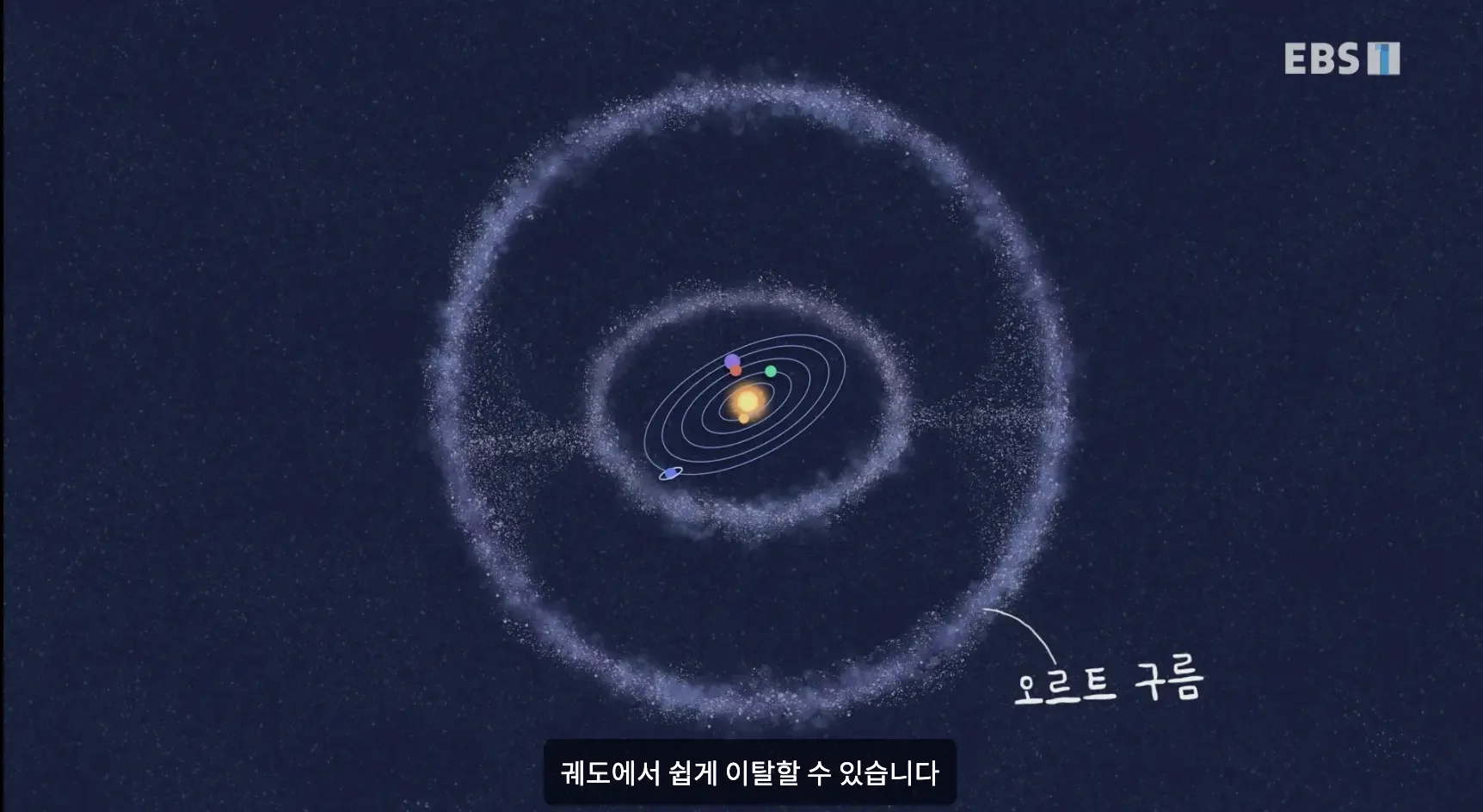
At the outer edge of the solar system, there's a loosely bound collection of celestial objects called the Oort Cloud. The Oort Cloud is the origin of long-period comets. But every time the solar system passes through a dark matter disk, objects in the Oort Cloud that are very far away and weakly bound can easily be knocked out of their orbits. When objects leave their orbits, they can either escape the solar system or collide with Earth. So when the solar system passes through a dark matter disk, the likelihood of such collisions with Earth increases.
What I've felt while studying this vast cosmic history is that the things that make up this universe and the process of its development are truly awe-inspiring and amazing. It's also remarkable that so many different scientific fields can be interconnected to explain what we observe.
Lecture 5 Summary#
Dark matter
- Exists but unknown -> Keep all possibilities in mind
- Dark matter -> Composed of elementary particles (assumption)
WIMPs (WIMP, Weakly Interacting Massive Particles)
- Particles with mass that interact weakly (theoretically hypothetical particles)
- Similar mass to the Higgs boson
- Interact with ordinary matter beyond just gravity
- Quantity similar to dark matter
- Can be verified experimentally
Model Building (Model Building)
- Creating candidate theories that could explain phenomena
- New approaches may be discovered in the model-building process
- Models are just models — verification is needed
Photons (Light)
- Mediate electromagnetic interactions between ordinary matter
Dark photons
- Mediate interactions between dark matter
Debt is the slavery of the free.
— Publilius Syrus