
Watch the Lectures#
Erwin Chemerinsky - Constitutions of the World 1. The United States
- Lecture 1 What Are Fundamental Rights?
- Lecture 2 Freedom of Expression
- Lecture 3 Freedom of Religion
- Lecture 4 The Right to Self-Determination
- Lecture 5 Rights of the Accused
Lecture 1: What Are Fundamental Rights?#
Lecture 1: What Are Fundamental Rights? Erwin Chemerinsky is an American constitutional scholar, currently serving as Dean of UC Berkeley School of Law, and as advisory and academic committee member of the American Constitutional Law Society. He enumerates the fundamental rights guaranteed by the U.S. Constitution, examines how they are protected and to whom they apply, and looks at how the Supreme Court's stance on the Constitution has been shifting.
In this lecture, I want to talk about what fundamental rights are under the U.S. Constitution and how they are guaranteed. I'll discuss where in the Constitution these rights come from, what it means for something to be a fundamental right, and to whom these rights apply.
The U.S. Constitution structurally promotes three social purposes.
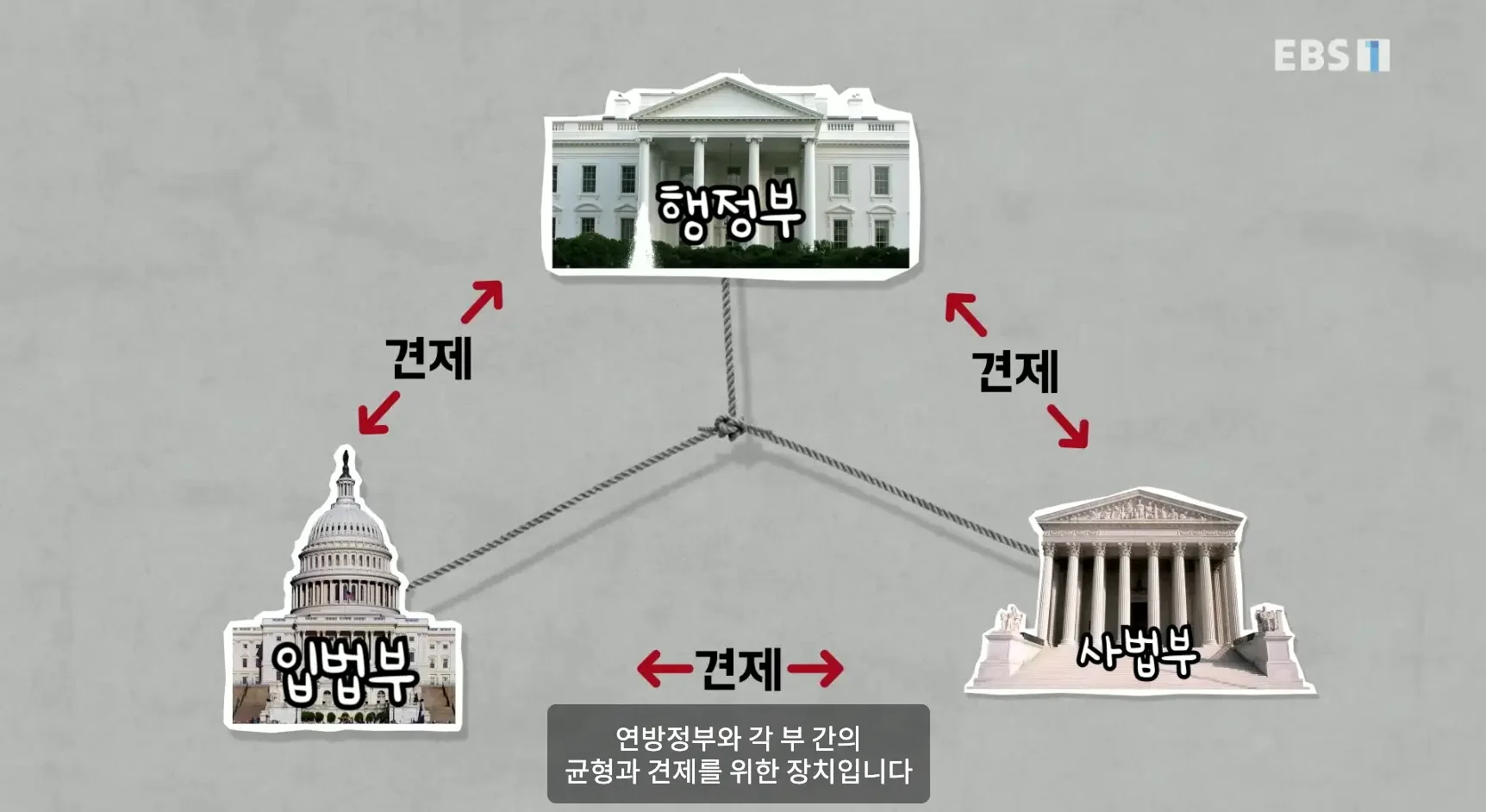
The first purpose is that the Constitution establishes the federal government and distributes power among its branches. It establishes legislative power and grants it to Congress, establishes executive power and grants it to the President, and grants judicial power to the Supreme Court and lower federal courts. This is the separation of powers we all know well — a mechanism for balance and checks between the federal government and its branches.
The second purpose is the vertical distribution of power between the central government and state governments. State governments existed before the United States was established and were the entities with the authority to ratify the Constitution. They transferred authority to the federal government, and the Constitution distributed power vertically between the federal and state governments. This distribution of power also served as a safeguard against tyranny.

The third purpose is the protection of individual liberty. In 1791, ten amendments known as the Bill of Rights were ratified in the United States. The Bill of Rights enumerates individual freedoms — freedom of expression, freedom of religion, freedom of assembly, and other freedoms that individuals can possess. The Ninth Amendment was intended to remind us that the rights listed in the Constitution are not the entirety of fundamental rights. State governments hold all powers except those prohibited by the Constitution.
There is a heated debate between originalists and non-originalists about whether rights that are not explicitly stated or enumerated would be guaranteed if the Constitution were amended today.
But what does it mean for a right to be a fundamental right? The Supreme Court has ruled that when the government seeks to infringe on a right considered fundamental, it must bear an enormous burden. The government can infringe on fundamental rights as long as it bears that burden.
An important point to remember is that the rights guaranteed by the Constitution only apply to the government. Private entities are not required to guarantee constitutional fundamental rights. The Constitution does not apply to private entities.
Fundamental rights limit the government's power. They do not limit the power of private companies or private universities. Instead, there are federal and state laws that limit the power of private entities like private companies and private universities. The Constitution and the guarantee of fundamental rights apply only to the government.
Lecture 1 Summary#
Three social purposes of the U.S. Constitution
- Separation of powers
- Vertical power distribution between central and state governments
- Protection of individual liberty
Bill of Rights: A charter and laws proclaiming human rights
Ten amendments added in 1791 as individual freedoms
- 1st Amendment: Guarantees freedom of expression, religion, assembly, and the right to petition
- 2nd Amendment: Guarantees the individual right to bear arms
- 3rd Amendment: Prohibits forced quartering of soldiers on citizens' property
- 4th Amendment: Limits police search and seizure powers
- 5th Amendment: Limits the government's power of prosecution; prohibits deprivation of life, liberty, or property without due process
- 6th Amendment: Right of the accused to stand trial in criminal proceedings
- 7th Amendment: Right to jury trial in civil cases exceeding $20
- 8th Amendment: Prohibits excessive bail and cruel punishment
- 9th Amendment: Guarantees other unenumerated rights
- 10th Amendment: Powers not delegated to the federal government are reserved to the states or the people
Supreme Court Originalists vs. Non-Originalists -> Major impact on constitutional fundamental rights
- Originalists
- Fundamental rights are only those explicitly stated and understood in the Constitution
- The law should not change over time
- No need to guarantee abortion rights or same-sex marriage rights
- Justices' and judges' discretionary power should be limited (imposing personal values on society)
- Non-Originalists
- The Constitution evolves -> a living Constitution
- Rights not mentioned should also be protected
- Interpreting the current Constitution through the thinking of 1787 or 1791 is unreasonable
When government infringement of fundamental rights is possible
- When an important purpose is presented
- When sufficient reason for government action + the only means to achieve the purpose is proven
- When strict scrutiny standards are met, government infringement is possible
Strict Scrutiny: The logic for examining the legitimacy of government infringement of fundamental rights
The Constitution and fundamental rights
- Fundamental rights limit government power
- Private entities are not subject to the Constitution
- If not a fundamental right, only rational basis review needs to be passed
Lecture 2: Freedom of Expression#
Lecture 2: Freedom of Expression. Erwin Chemerinsky is an American constitutional scholar, currently serving as Dean of UC Berkeley School of Law, and as advisory and academic committee member of the American Constitutional Law Society. We often say "I have freedom of speech" when someone stops or opposes our opinion. What exactly are the boundaries of freedom of expression? What's the difference between constitutional and unconstitutional? Lecture 2 attempts to define the ambiguity of freedom of expression.
Let me talk about how freedom of expression, guaranteed as a fundamental right, is applied.
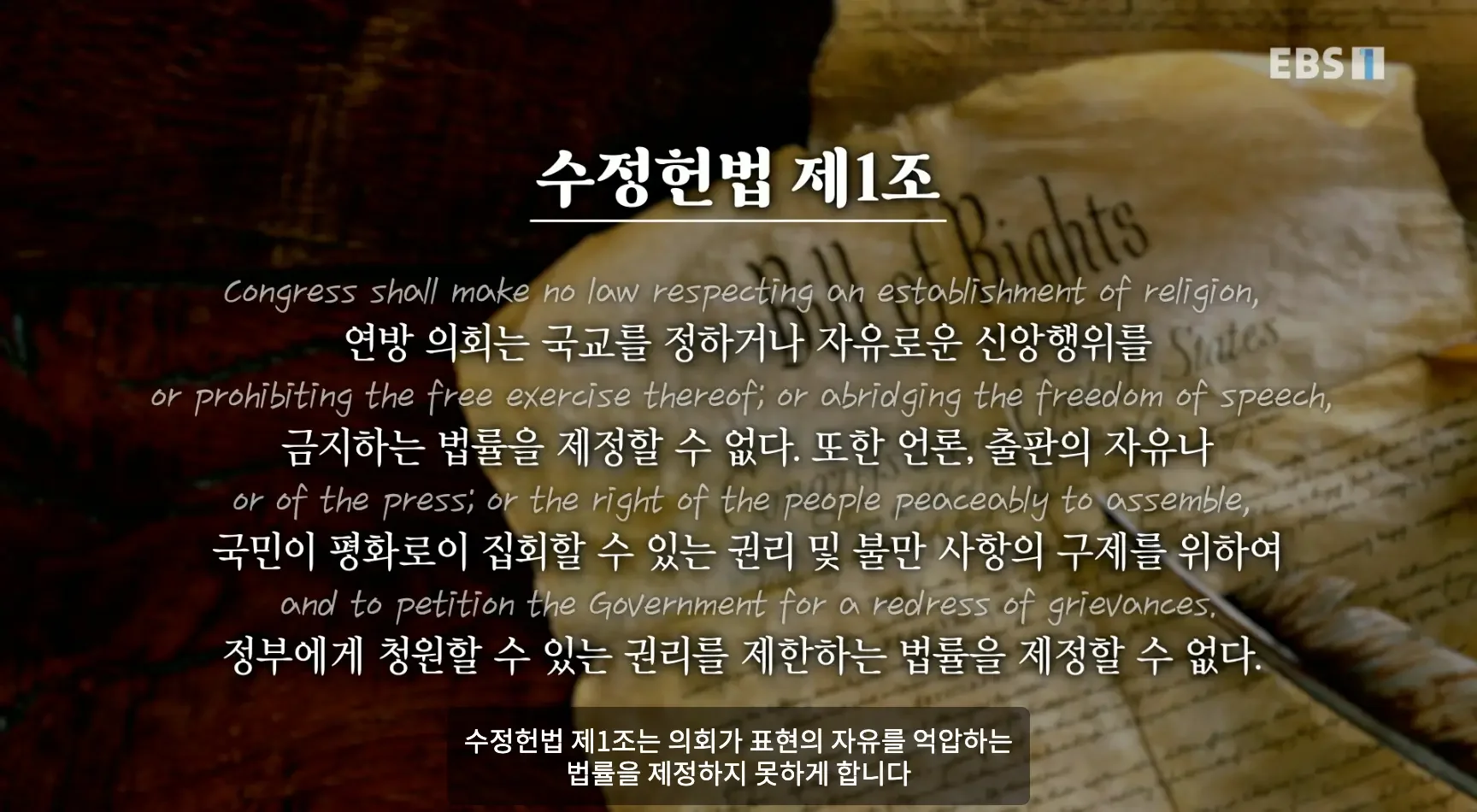
The First Amendment prevents Congress from enacting laws that suppress freedom of expression. Although it says that expression cannot be curtailed by law, the courts do not interpret this as an absolute prohibition on government regulation. An absolute prohibition is realistically impossible.
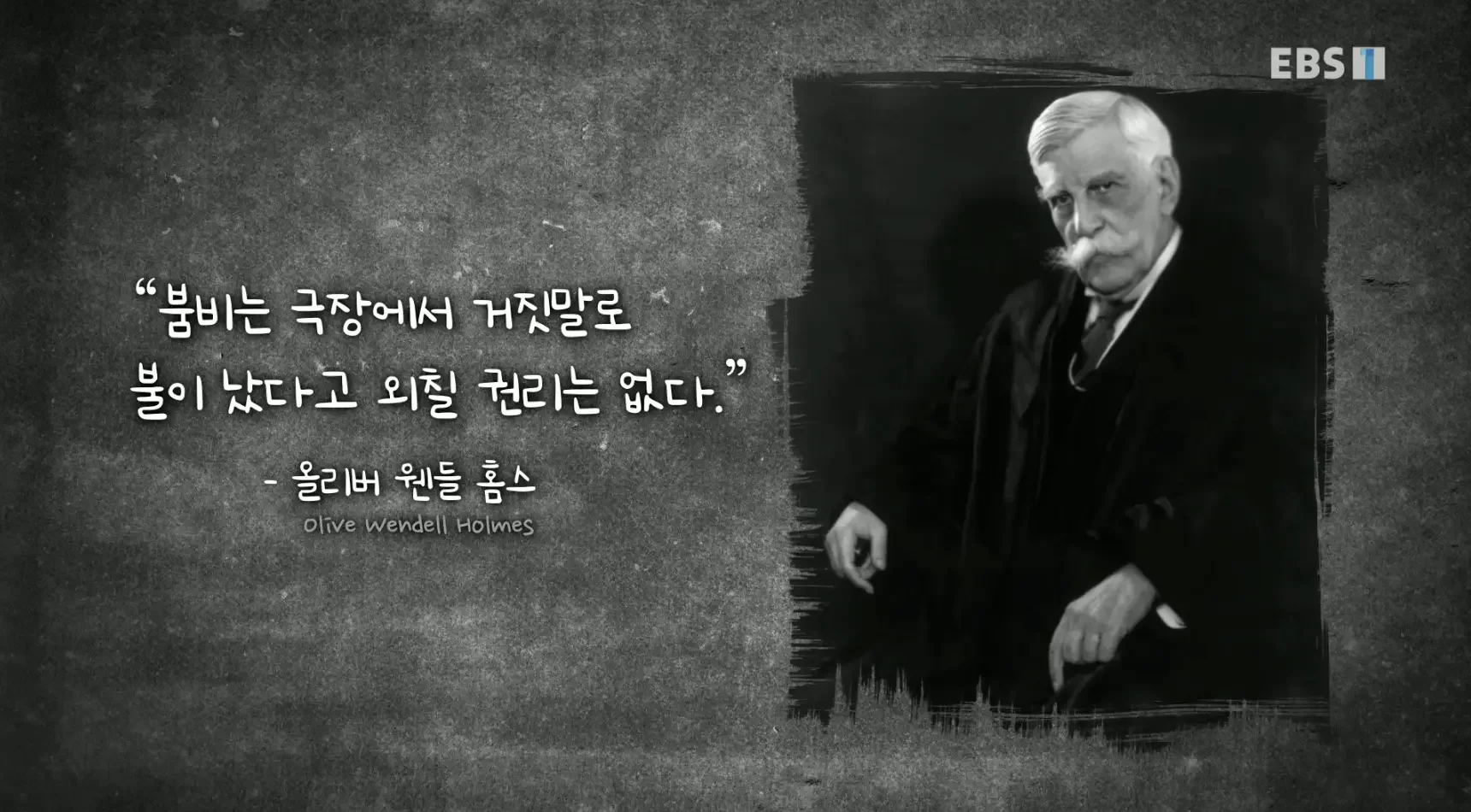
Over time, the Supreme Court has made it clear that the government can regulate expressive conduct in certain situations. Long ago, Justice Oliver Wendell Holmes said there is no right to falsely shout fire in a crowded theater.
Now let me discuss three important principles regarding freedom of expression, particularly as they relate to college campuses.
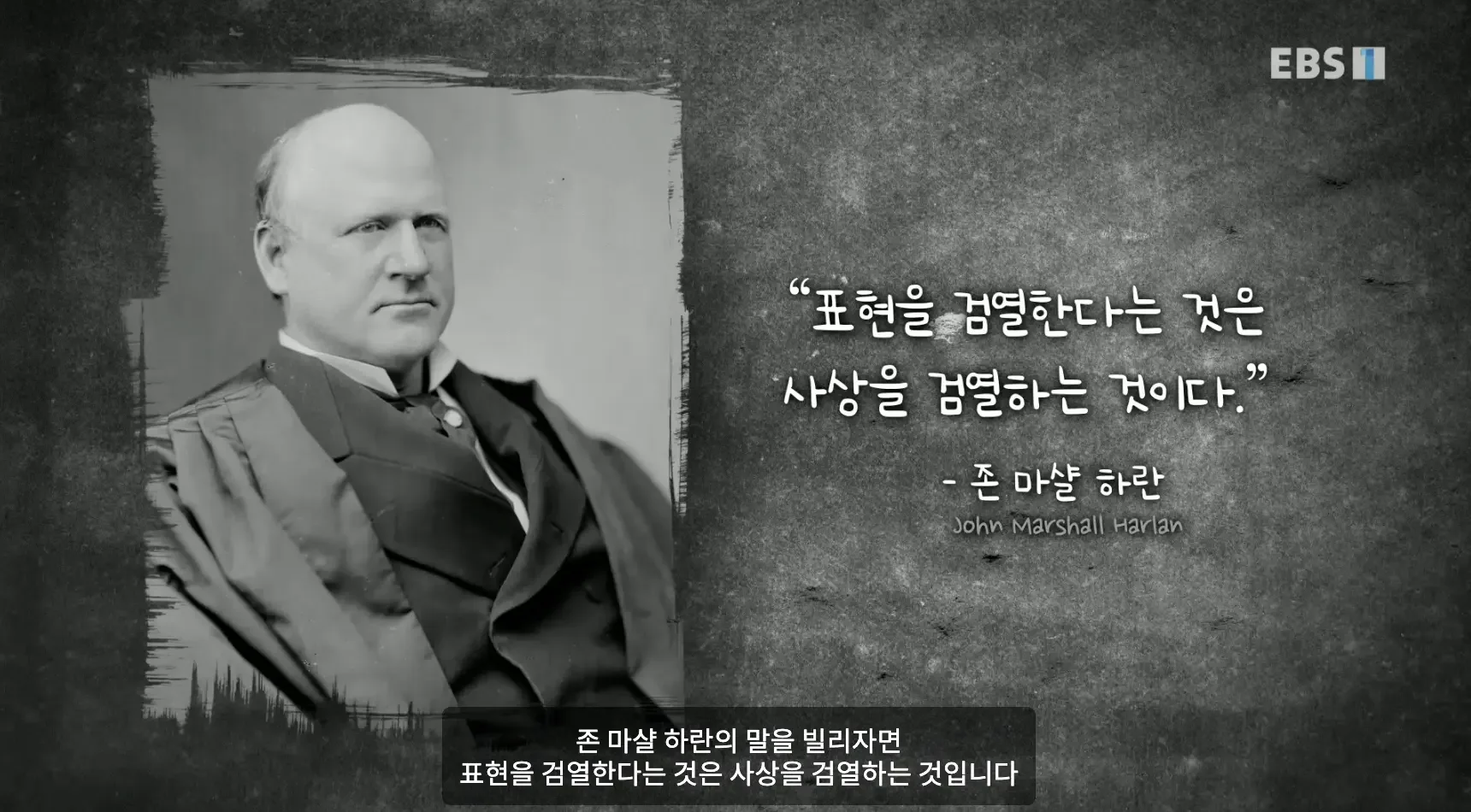
The first is that everyone can express all thoughts and opinions. Even offensive thoughts or views can be expressed. I teach students that on campus, all thoughts and opinions, even offensive speech, can be expressed.
The second principle is that freedom of expression is not absolute. There are three types of expression not protected by law, which are particularly significant for universities. First, incitement to illegal activity is not protected by the First Amendment. Second, "true threats" (expressions that cause others to fear for their physical safety) cannot be protected by the First Amendment. Third is harassment. Unlike other countries, the United States protects hate speech under the First Amendment.
The third point is that restrictions on time, place, and manner are permitted regarding freedom of expression. Having the right to express a message does not mean you can express it regardless of time, place, or manner.
Free expression is guaranteed by the First Amendment and is considered a fundamental right. Above all, this provision means all thoughts and viewpoints can be expressed. However, the government can restrict certain expressions, meaning there are categories of expression that receive less protection. The government can restrict the time, place, and manner. But the restriction itself must be content-neutral. There must be important grounds, and appropriate alternative venues must be available.
Lecture 2 Summary#
Three principles of freedom of expression
- All thoughts and opinions can be expressed
- There are forms of expression not guaranteed by the Constitution
- Restrictions on time, place, and manner are allowed (also applies to ensuring safety)
Cases where First Amendment freedom of expression is not protected
- Incitement to illegal activity
- True threats
- Harassment
The United States protects hate speech under the First Amendment
- Hate is difficult to clearly define and is treated as a form of expression
- First Amendment -> fundamental right to express all thoughts and viewpoints
Lecture 3: Freedom of Religion#
Lecture 3: Freedom of Religion. Erwin Chemerinsky is an American constitutional scholar, currently serving as Dean of UC Berkeley School of Law, and as advisory and academic committee member of the American Constitutional Law Society. The First Amendment ratified two provisions: the "Establishment Clause" and the "Free Exercise Clause." What do these two provisions say about religious freedom in America? How has the Supreme Court's view on religious freedom changed? Let's examine religious freedom under the U.S. Constitution.
In this lecture, I'll discuss the freedom of religion guaranteed by the U.S. Constitution. Before the Constitution was drafted, significant religious persecution existed in both England's colonies and the homeland.

The First Amendment contains two provisions regarding religious freedom. The first is the provision that Congress cannot establish a national religion. This is known as the Establishment Clause. The second is the provision that Congress cannot restrict the freedom of religious practice. It's also called the Free Exercise Clause of the First Amendment.
We know that America is politically divided. Conservatives and progressives hold considerably different views on the Establishment Clause and the Free Exercise Clause.
Let me first talk about the Establishment Clause. There are three different perspectives on interpreting the meaning of this provision.
The first perspective argues that this provision means the separation of church and state. They believe there should be a wall between religion and the state. The government should stay in the secular realm as much as possible.

The second perspective is the opposite. It's called accommodationism. The government should accommodate religion, and religion should receive government support. From the accommodationist viewpoint, the Establishment Clause is violated only when the government establishes a specific religion or coerces religious practice. America is a very religious country. The view is that religion should be recognized as part of government activities and should be supported.
The third perspective is a middle ground. It's called neutralism. It holds that the Establishment Clause is violated only when the government supports a specific religion or group.
Depending on which of the three perspectives a justice holds, a ruling can either violate or not violate the Establishment Clause.
Since the Smith decision, religious exceptions have not been recognized when applying general laws. However, current conservative justices want to recognize religious exceptions in the application of anti-discrimination general laws, while progressive justices oppose this and argue that discrimination must stop.
In any country, there is always tension between freedom and equality in the law. Laws prohibiting discrimination restrict the freedom to discriminate. For the past 50 years, American society has believed that stopping discrimination is more important than guaranteeing the freedom to discriminate. But now, conservative justices on the Supreme Court are saying that religious freedom is more important than anti-discrimination laws, claiming they are upholding the Free Exercise Clause.
A substantial ideological shift has occurred regarding the Establishment Clause and the Free Exercise Clause. In the past, the Establishment Clause followed the principle of separation of church and state. But now it follows an accommodationist stance, allowing religion as part of government activities in unprecedented ways and supporting religion.
Regarding the Free Exercise Clause, in the past, courts said no exceptions to general laws should be made for religion. But now courts are willing to guarantee religious freedom and apply such exceptions. There is always tension in the law.
Lecture 3 Summary#
Freedom of Religion under the First Amendment
- 1791 amendments emphasized religious freedom
- Establishment Clause + Free Exercise Clause
Three perspectives on the Establishment Clause — "The verdict depends on which perspective the justices support"
- Separationism: Separation of religion and state -> government stays in secular realm vs. religion in private realm
- Accommodationism: Government and religion in harmony; government can establish specific religions
- Neutralism: Establishment Clause violated only when government supports a specific religion or group
1940s-1980s: Justices supporting strict separation of church and state
-> 20+ years of growing conservatism
-> 2017-2020: 3 conservative justices appointed
-> Currently 6 out of 9 justices support accommodationism (conservative)
Free Exercise — "The U.S., which strictly separated church and state, is seeing the wall crumble"
- Recognizing religious exceptions in general law
- Conservative justices in favor vs. progressive justices against
- Free Exercise Clause: Past) no exceptions -> Present) exceptions possible
Laws prohibiting discrimination restrict the freedom to discriminate — "Substantive ideological changes in the Establishment and Free Exercise Clauses"
- U.S. past 50 years: Stopping discrimination is more important than freedom to discriminate
- U.S. present: Religious freedom is more important than stopping discrimination
- Establishment Clause: Past) separation of church and state -> Present) accommodationist stance
Lecture 4: The Right to Self-Determination#
Lecture 4: The Right to Self-Determination. Erwin Chemerinsky is an American constitutional scholar, currently serving as Dean of UC Berkeley School of Law, and as advisory and academic committee member of the American Constitutional Law Society. The right to make important decisions about one's own life without government intervention — the right to self-determination. This concept is guaranteed under the Constitution, but has limitations in being specifically defined. Therefore, conflict between "originalist" justices who want to maintain the old Constitution and "non-originalist" justices who argue the Constitution changes with time and technological advancement was inevitable. Two different perspectives on things they want to prohibit. Lecture 4 covers this fierce confrontation.
The word "privacy" is often mentioned as one of the fundamental rights. Privacy is actually a comprehensive term used to describe various freedoms regarded as basic human rights.
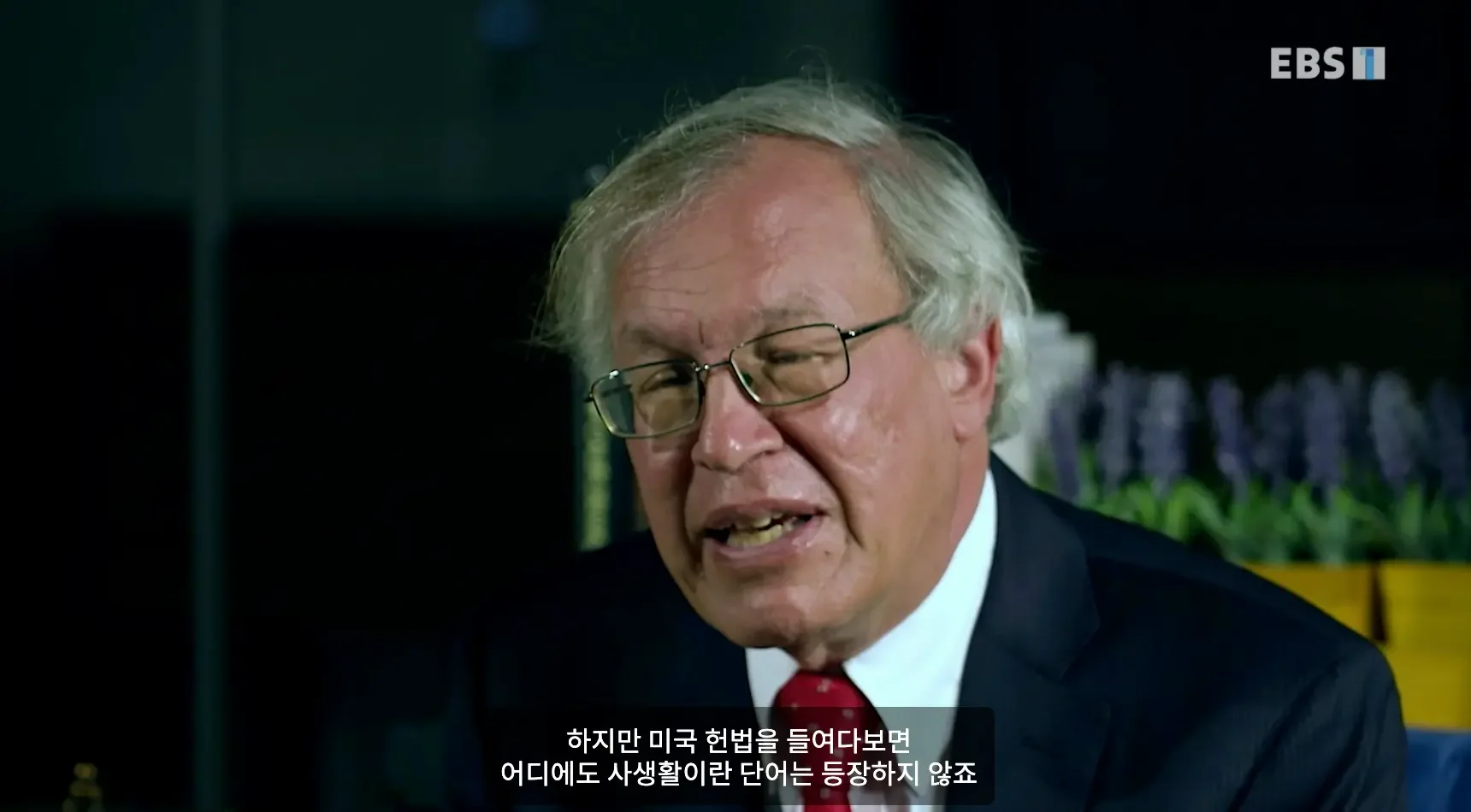
The second concept we commonly think of is informational privacy, which refers to the right to control information about our private lives. We all have secrets we don't want to share with others.
In this lecture, I'll focus on the right to self-determination. The right to self-determination is the concept of having the authority to make important decisions about one's own life without government intervention.
Let me revisit the specific rights that the Supreme Court has upheld as fundamental to the constitutional right to self-determination and liberty.

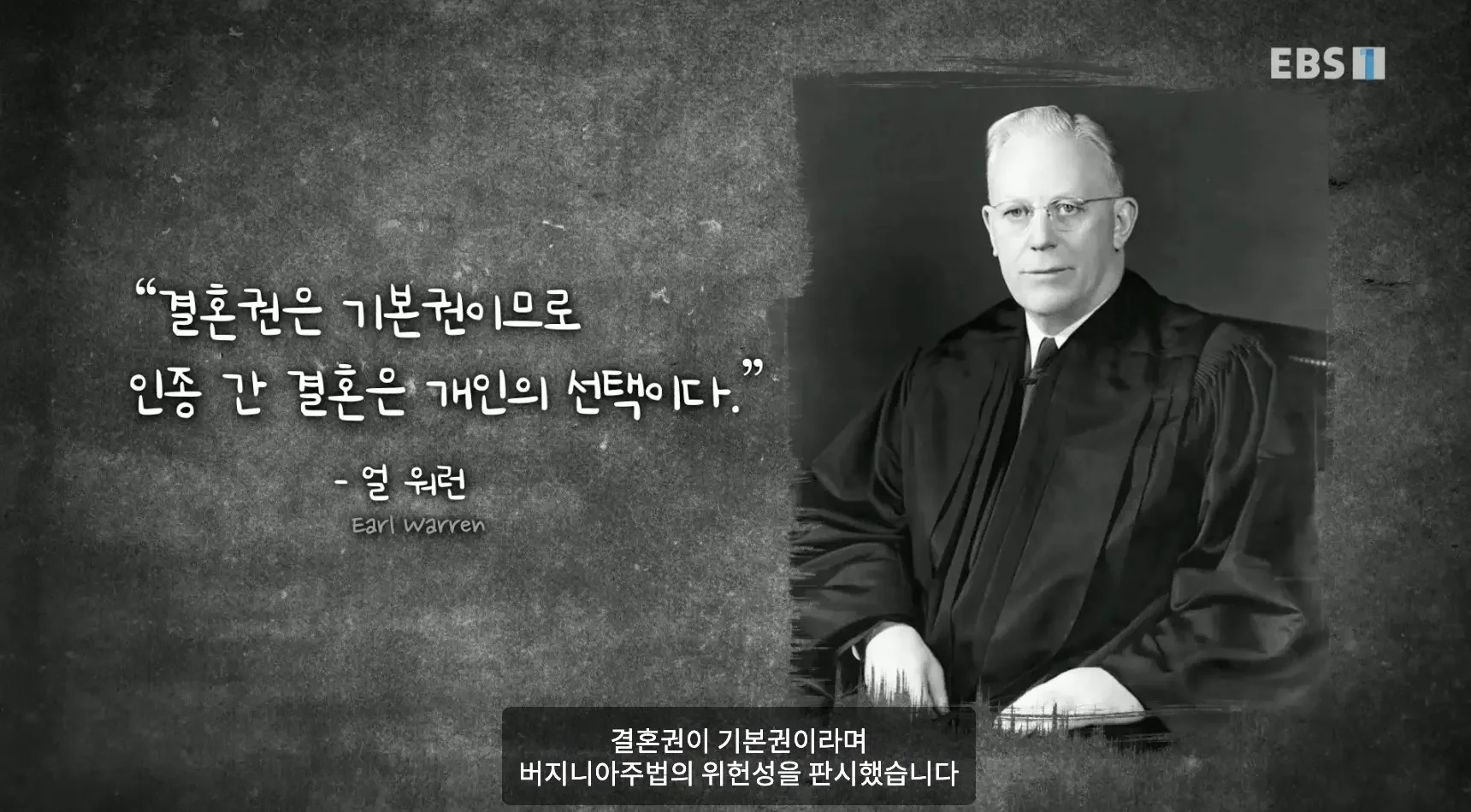
The first right is the right to marry. The Supreme Court treated the right to marry as a fundamental right under the liberty in the Due Process Clause. Surprisingly, it wasn't until 1967 that the Supreme Court ruled that bans on interracial marriage were unconstitutional.
The second right of self-determination is the choice to have children — the right to procreate. The Supreme Court made it clear that the right to have children is one of the most important human rights, and that the government can restrict this right only when there is a compelling interest and no other way to achieve it, since those affected by such laws suffer irreparable harm.
The third right is the right to custody of one's children. The government can permanently separate children from their parents only when there is sufficient reason, such as parental abuse or neglect. The Supreme Court ruled that all parents have the right to raise their children and that the government can only revoke custody when there is a pressing need. However, it is not an absolute right.
The fourth right is the right to keep the family together. This right is discussed separately because family doesn't simply mean just parents and children. There are extended families too. The Supreme Court agreed that the liberty under the Due Process Clause guarantees the right to form a family. If the government cannot meet strict scrutiny standards and cannot prove a compelling interest, it cannot strip away the right to family unity.
The fifth right is parents' right to control the education of their children. It was established that there exists a constitutionally guaranteed right to control children's education.
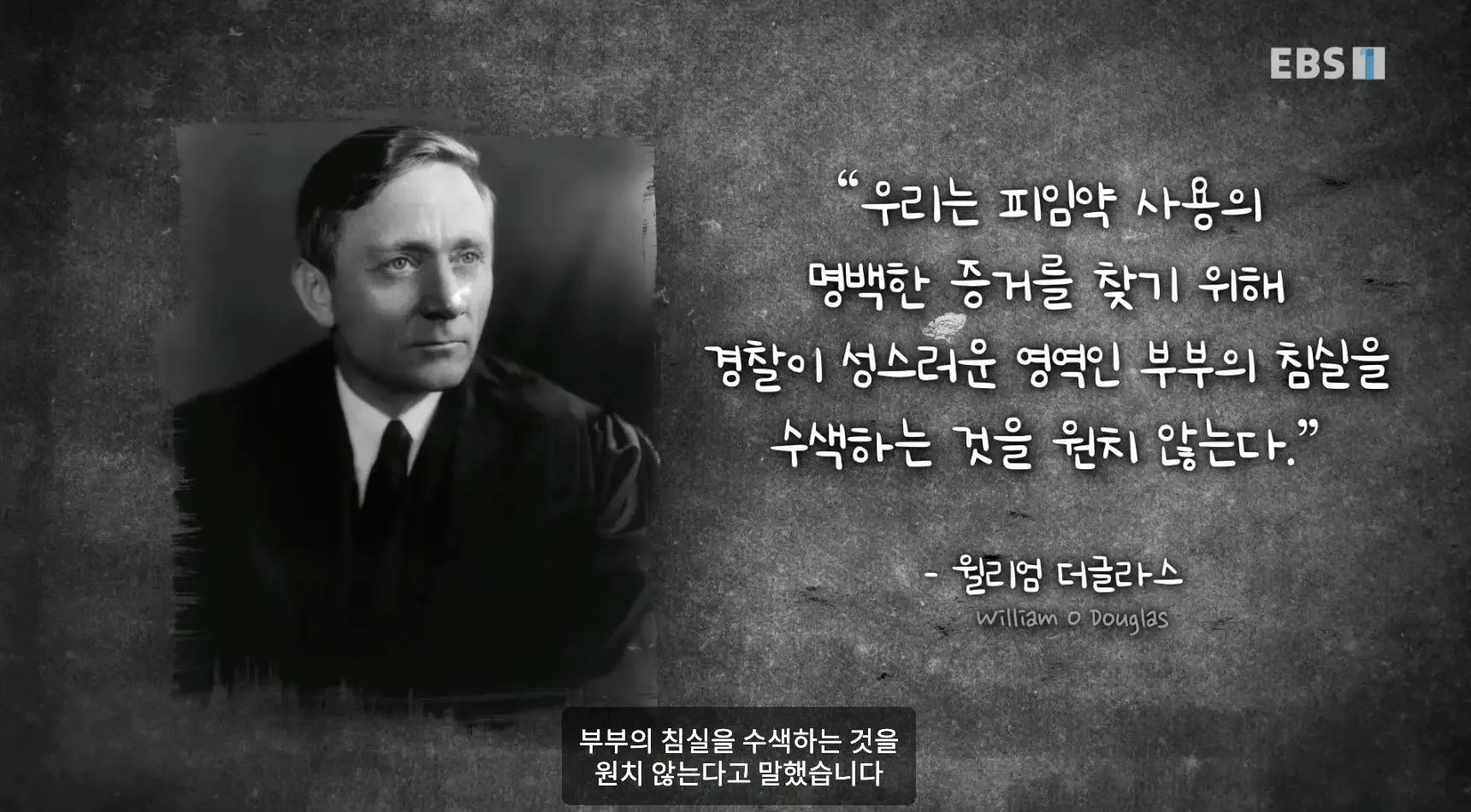
The sixth right is the right to purchase and use contraceptives. One of the most famous Supreme Court rulings related to privacy is the 1965 Griswold v. Connecticut case. It held that the right to choose whether to conceive and bear children is a constitutionally guaranteed right for everyone, married or unmarried.
The seventh right is the right to abortion. Without a doubt, among all the constitutional rights guaranteed by the Supreme Court, the most controversial is the right to abortion. The Supreme Court held that the decision to have an abortion before the fetus reaches viability should be left to the pregnant woman and her doctor.
The eighth right is the right of consenting adults to engage in same-sex sexual activity. It was established that the right to privacy includes such conduct.
The ninth right is a competent adult's right to refuse medical treatment, including emergency treatment. It was established that individual liberty includes the capacity to refuse medical treatment, including refusing emergency care and refusing food or water. However, children may not have this right since they may have difficulty making sound judgments. This right does not apply in cases of infectious disease treatment.
I've been talking about liberty. There's also a saying that my right to swing my fist ends where your nose begins. But if my rights affect others, the government can intervene.
Lecture 4 Summary#
Privacy
- Used to describe specific freedoms regarded as human rights
- A comprehensive term, not specifically guaranteed in fundamental rights
- The general word "liberty" is interpreted to protect numerous specific rights
Meanings of privacy
- Freedom from intrusion: Right to refuse government's unauthorized entry onto private property, searches, and control over information disclosure
- Right to self-determination: Authority to make important decisions about one's own life
- Right to self-determination not specifically stated in the Constitution
- Government must present legitimate reasons when infringing on self-determination
Fundamental rights of self-determination -> Rights not mentioned in constitutional text but protected by the Supreme Court
- Right to marry
- Right to have children
- Right to custody of children
- Right to family unity
- Right to education of children
- Right to purchase and use contraceptives
- Right to abortion (the most controversial of constitutional rights)
- Right to consensual same-sex sexual activity between adults
- Adult's right to refuse medical treatment (only for personal matters; government can intervene in contagion issues)
Lecture 5: Rights of the Accused#
Lecture 5: Rights of the Accused. Erwin Chemerinsky is an American constitutional scholar, currently serving as Dean of UC Berkeley School of Law, and as advisory and academic committee member of the American Constitutional Law Society. Where did the Miranda rights begin? Personal freedoms that crime suspects had to give up — but what if fundamental rights actually remained within them? The rights of criminal prosecution clients and defendants guaranteed by the amendments! And the last chance given by the courts for the future of juvenile offenders! Lecture 5 unpacks this profound story.
In this lecture, I'll talk about the rights of crime suspects and criminal defendants guaranteed by the United States Constitution.
With the addition of the 10 amendments in 1791, several of them specifically address suspects and defendants. The framers of the Constitution knew that the government could exercise enormous power in criminal cases by jailing citizens, sentencing them to death, and stripping them of their freedom.
There is an ideological divide here as well. Generally, political progressives want to protect the rights of suspects and defendants in criminal cases. They believe that if we guarantee the rights of those standing trial for crimes, we can all be protected from government power. Conversely, conservatives believe that giving more authority to the government, police, and correctional institutions will build a safer society.
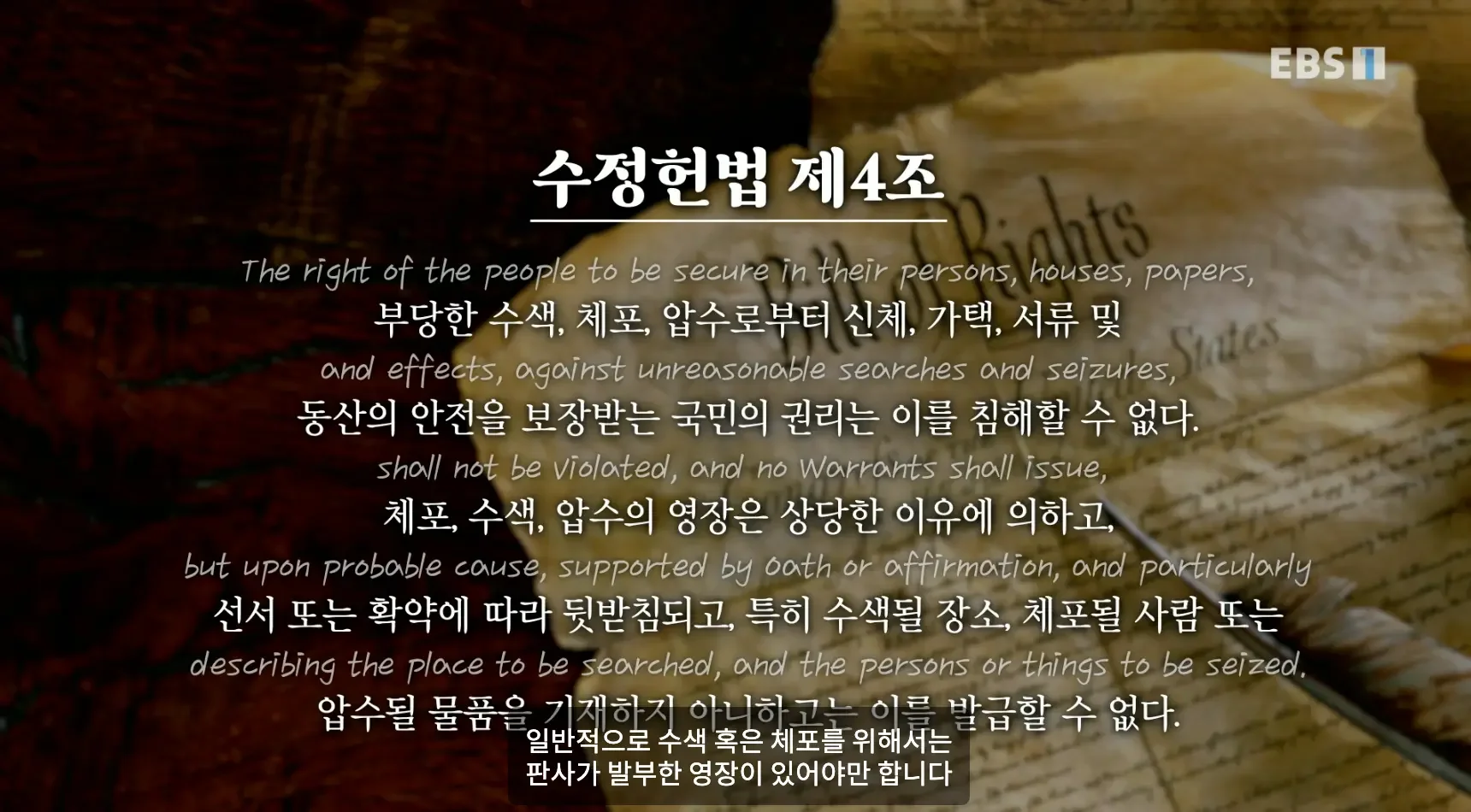
The Constitution states that police can conduct searches and arrests only when there is probable cause. Generally, a warrant issued by a judge is required for a search or arrest.
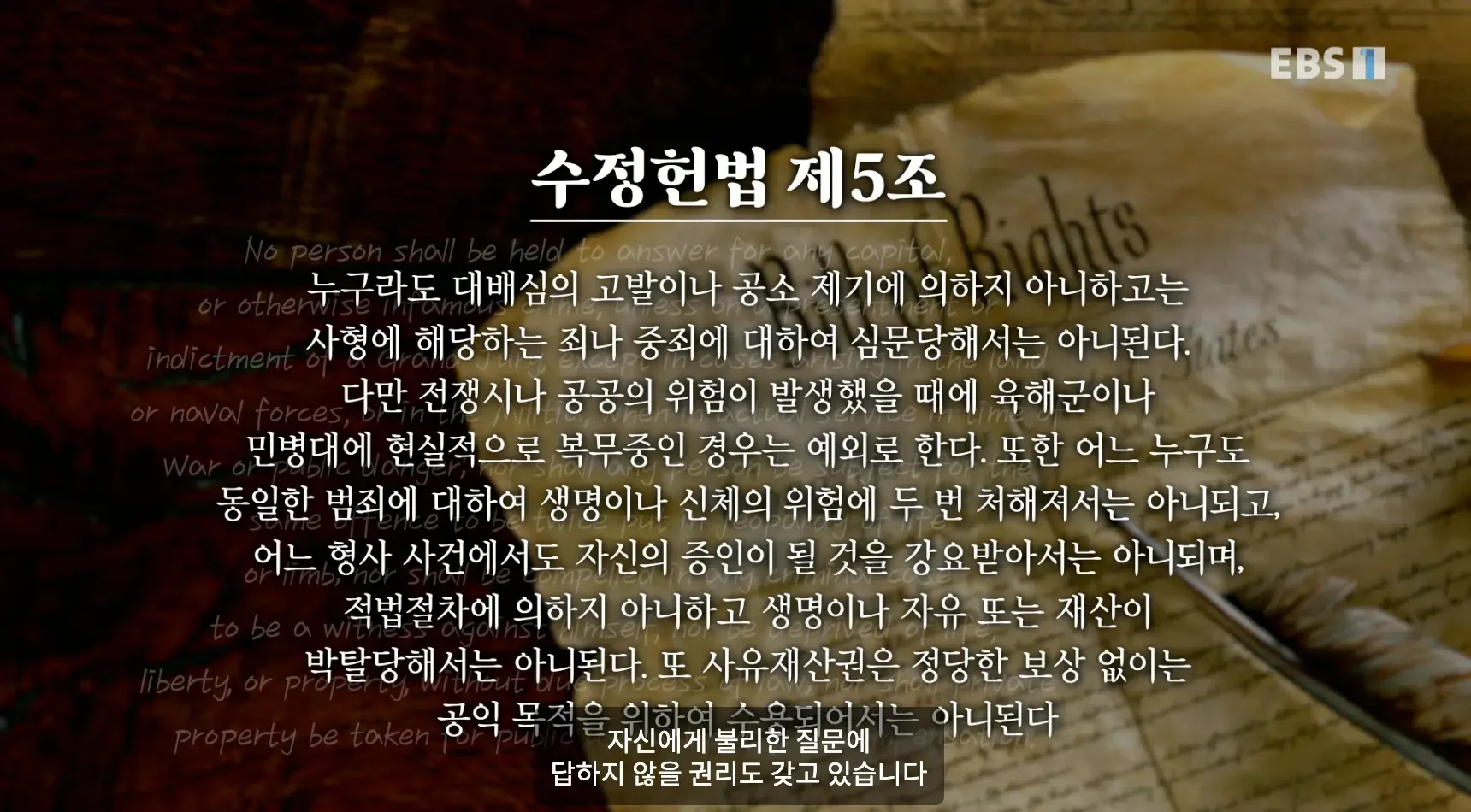
Conviction in a criminal trial requires proof beyond a reasonable doubt. There's an old saying from English law: "It is better to let a hundred guilty men go free than to convict one innocent person." This saying means that the government should protect the innocent by bearing the obligation to prove guilt beyond a reasonable doubt. This doesn't mean certainty — few things in life are certain. But a preponderance of evidence is not enough. Proof beyond a reasonable doubt, with clear and compelling evidence, is required.
The rights guaranteed by the Sixth Amendment — the right to counsel, the right to require the prosecution to prove charges beyond a reasonable doubt, the right to a jury trial, and the right to confront accusers — are important safeguards to prevent innocent people from being convicted.
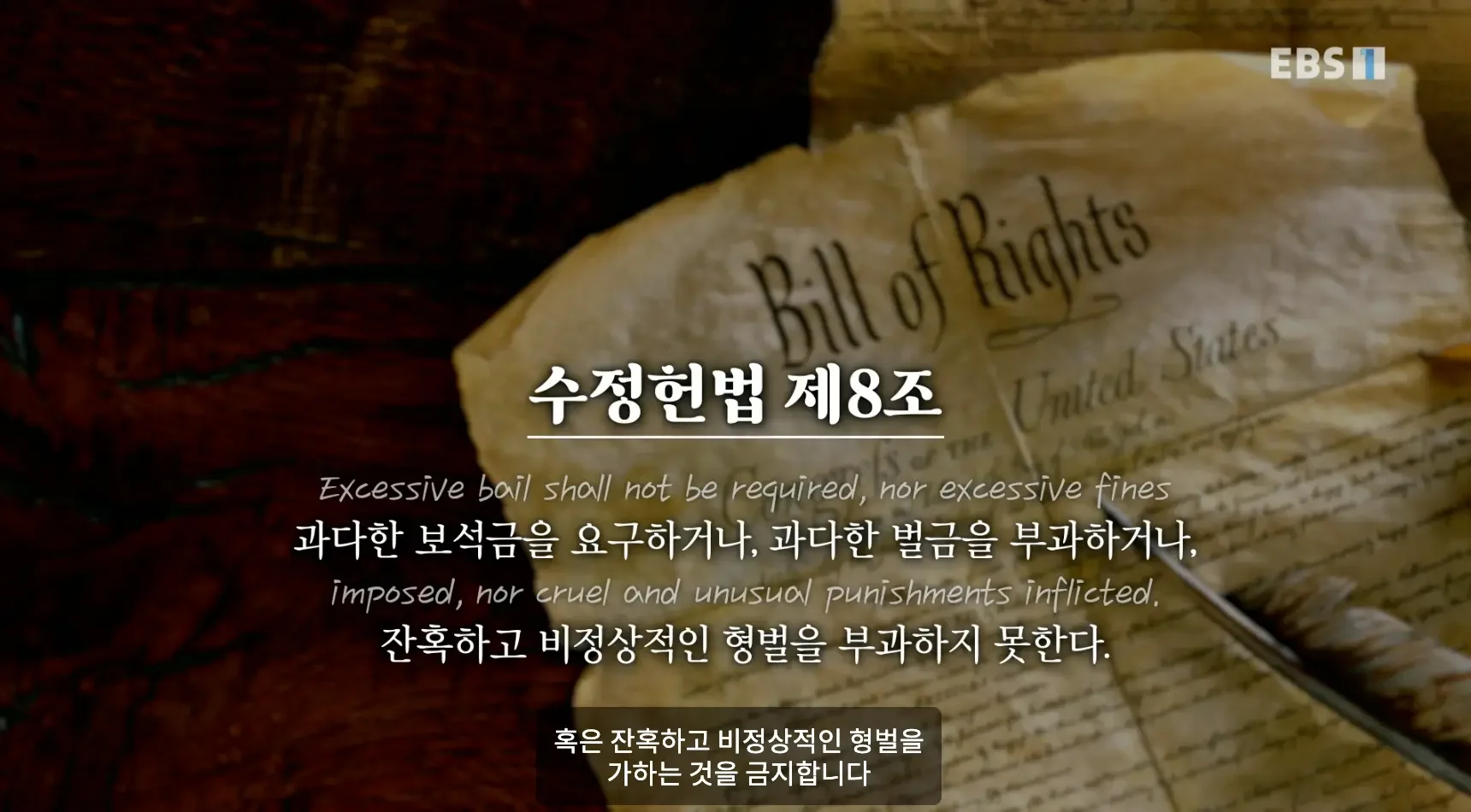
In 1972, the Supreme Court ruled in Furman v. Georgia that the death penalty constituted cruel and unusual punishment and was potentially unconstitutional.
Lecture 5 Summary#
Criminal defendant: Can refuse to answer police questions under the Fifth Amendment
Miranda Rights
- The principle that law enforcement must inform a crime suspect of the reasons for arrest and the suspect's rights at the time of arrest
- Right to remain silent, right to refuse self-incriminating statements, right to counsel
Rights of criminal defendants under the Sixth Amendment
- Right to counsel
- Right to require proof beyond a reasonable doubt (overwhelming evidence required)
- Right to demand a jury trial
- Right to confrontation (right of the defendant to face the accuser and cross-examine)
The smallest flower is a thought, a life answering to some feature of the Great Whole, of whom they have a persistent intuition.
— Honore de Balzac