Watch the Lectures#
Peter Singer - Practical Ethics
- Lecture 1 Why Utilitarianism?
- Lecture 2 Effective Altruism
- Lecture 3 Animal Liberation: Theory
- Lecture 4 Animal Liberation: Practice
- Lecture 5 How Should We Live?
Lecture 1: Why Utilitarianism?#
What is the right thing to do?
And how should we live?
What should we do?
Utilitarianism answers like this: "What's right is making the choice that produces the best outcome among the various choices I can make."
That best outcome shouldn't be just for me. It should be for everyone affected by the action. "Everyone" includes not just people now but all foreseeable people in the future.

Utilitarianism acknowledges that following general moral rules sometimes produces the best outcomes. But if a peculiar situation arises where that rule doesn't produce the best outcome, utilitarianism would tell you not to follow that rule.
There are countless ethical theories explaining what the right action is, but I think utilitarianism is the best and most defensible ethical theory among them.
When we actually face real situations and make decisions, we can see that we choose what produces the best outcome. When urgent situations arise, we can't follow absolute rules. I think we should follow utilitarianism. One reason is that other ethical views are hard to actually apply when difficult situations arise. In such situations, following existing rules might cause more suffering and unhappiness. I also like utilitarianism because it's practical.
The goal of utilitarianism is to maximize happiness and minimize suffering. Utilitarians want to achieve exactly that goal. They think doing so is the right thing and the good. Utilitarians care about all beings that can feel happiness and suffering. That's why utilitarianism says: we shouldn't only consider ourselves, but all beings capable of experiencing pleasure and pain.
Lecture 1 Summary#
Utilitarianism: What's right is the choice that produces the best outcome. The best outcome is for everyone, including the future.
Counter to Utilitarianism: Kant's Deontology. Motivation matters, not outcomes. People should be treated as ends, not means.
Why Utilitarianism is right:
- Maximize happiness, minimize suffering
- Utilitarian concern -> All beings that feel pleasure and pain
- All who can feel pleasure and pain are equal
- Doesn't evaluate principles as good or evil
- An ethical framework that can actually be applied in urgent situations
Lecture 2: Effective Altruism#
In this lecture, I'll talk about Effective Altruism. In a broad sense, effective altruism is a philosophy.
Altruism is the principle of putting others before yourself, where the purpose of action is placed in the happiness of others, and it's the opposite of egoism, which prioritizes one's own interests.
You could say it's a life philosophy that guides you as you go through life. Effective altruism is also a social movement. There's a core idea underlying effective altruism: making the world a better place should be one of our life goals. That's why it's called "altruism."

We pursue efficiency in many parts of our lives. We try to use our time and money efficiently. But strangely, when we act altruistically or for a particular cause, we don't think about how efficiently our resources are being used.
If you can save a child with just a small cost and inconvenience — you'd feel proud about doing something good, and if you saved a child, that's truly wonderful. I hope you would save the child, and I believe most people would. But if you can save a child in that situation, you should also think about the children dying in other countries.
What's the difference between the life of a child right in front of you and one far away? Will you say that not saving a child right before your eyes is wrong, but you don't need to care about a child far away? I don't think there's a difference. Any child's life. Both children are strangers to me. But every child's life is equally precious and equally important. Of course, I understand there are psychological factors. It's natural to be more drawn to a child you can see than one far away who's invisible. That's a psychological trait of humans. It's human nature and temperament. We feel compassion for those nearby and have trouble feeling it for strangers. But the effective altruism movement argues this: even if we have that tendency, we should help others in the most efficient way possible. And if that means helping people in distant countries, then that's what we should do. We need to care about where we can do the most good. That's exactly why the effective altruism movement focuses on helping people in low-income countries — because you can provide much more useful help there.
If you give 750 a year, their life would be completely transformed. If you become an effective altruist, you'll find greater satisfaction in life. So I don't think becoming an effective altruist means sacrificing your life at all.
If you positively change the world and many people's lives, you'll feel a tremendous sense of accomplishment. And in my opinion, helping others is far more satisfying and rewarding than buying more things.
Lecture 2 Summary#
Effective Altruism
- A life philosophy that serves as a guide in life
- Think efficiently about altruistic actions too
- Greater happiness comes from doing valuable work than from consumption
- We don't think about efficiency when being altruistic
Effective Altruism Movement
- A social movement to create a better world
- A movement to make altruistic actions more efficient
Extreme poverty line: The minimum cost needed for survival
7-800 million people worldwide live below the extreme poverty line
Becoming an effective altruist increases life satisfaction!
- Spending for a better world, not just for yourself
- For the same cost, helping others brings greater accomplishment and satisfaction
Lecture 3: Animal Liberation — Theory#
In this lecture, I'll talk about animal ethics. What's the moral difference between humans and animals? What criterion can we use to divide morally significant beings from those that aren't? Which beings should we consider insignificant and which should we protect?
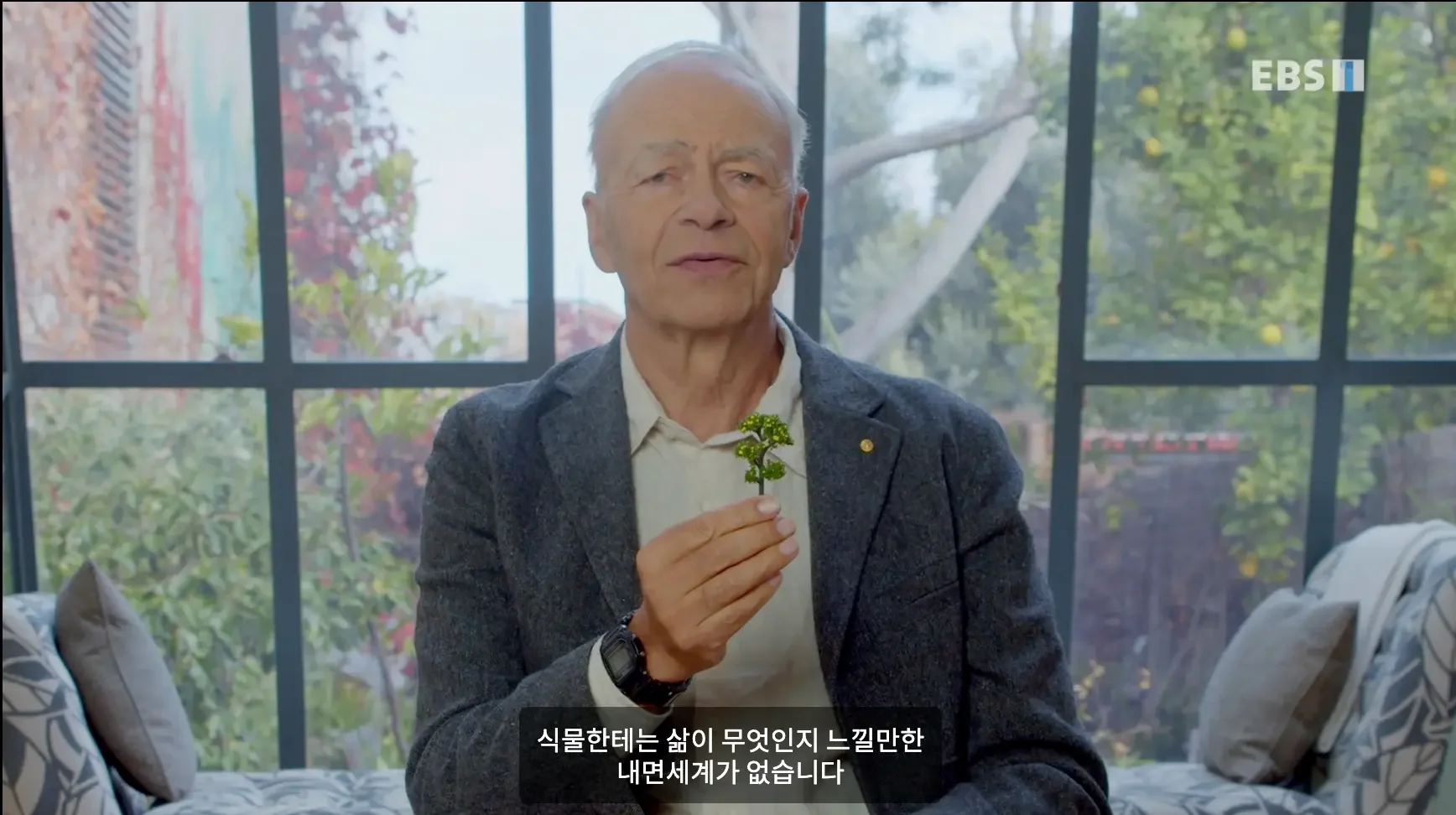
After Nazi Germany committed such atrocities, all nations in the world signed the Universal Declaration of Human Rights. It contained the idea that all humans have rights and must be protected. This declaration is based on the spiritual fact that humans should have freedom for their own development. For this, a collective effort to enhance human dignity is needed. This was certainly a great advancement.
Why can we, simply because we're members of the species Homo sapiens, have rights that other species don't? What makes being a member of a species so special? Is speciesism really different from historical racism? What can justify discriminating between humans and animals based on species?
Jeremy Bentham asked this question:
What should be the insurmountable boundary?
This boundary refers to the criterion for granting moral rights. A baby one week or one month old doesn't speak better or reason better than an animal. In fact, it's worse.
Jeremy Bentham said:
The criterion should be not the ability to reason or speak, but whether they can suffer.
The fact that animals can suffer means we shouldn't treat them carelessly. That's why beings capable of suffering — like humans and animals — have moral status and shouldn't be treated carelessly.
Lecture 3 Summary#
The moral criterion for discriminating between humans and animals -> Reason cannot be the basis for moral status.
Living beings: Humans, animals, plants
Humans: Have sentience, can grow. Complex and intellectual lives, capable of ethical judgment
Animals: Have sentience, can grow.
Plants: Lack sentience
Immanuel Kant: Treat humans as ends, not means. Animals should be treated as means, not ends.
Jeremy Bentham: The criterion should be not the ability to reason or speak, but whether they can suffer.
Why we should pursue animal liberation:
- There's no basis for denying their moral status
- All sentient beings are equal
Lecture 4: Animal Liberation — Practice#
Why can we, simply because we're Homo sapiens, have rights that other species can't?

Which animals can feel pain? It's clear that vertebrates feel pain. Vertebrates have nervous systems similar to ours. They respond to pain in ways similar to humans. Some invertebrates also feel pain.
Let's look at how we treat animals. In my view, we don't really care much about animals' suffering and happiness. We clearly don't give it as much weight as human suffering and happiness.
Sometimes we inflict terrible suffering on animals — as long as it benefits humans even slightly. The place that causes the most suffering to animals is the livestock industry. All of this is to produce more meat or eggs at cheaper prices. We humans rob hundreds of billions of animals of their happiness and sacrifice their lives. We make animals live painful lives simply to produce products more cheaply.
There's a paper published in The Lancet, a prestigious medical journal, showing that if we stopped eating meat and instead increased our consumption of vegetables and grains, everything would be better than it is now. It's better for our health and better for the planet, because the livestock industry is a major source of greenhouse gas emissions.
What I wanted to say about animal liberation was: let's stop animal exploitation. At first, people laughed. But gradually, more and more people started supporting my views. The ideas began to be taken seriously, and in that sense, we've made steady progress. Concern for animals has grown, respect for animals has grown, and advocating for animal rights has become something natural.
The idea that humans should have rights or moral status that other species can't have, simply because they're Homo sapiens, needs to be abandoned. Just as we reject sexism and racism, we should reject speciesism.
Pay attention to your food and make ethical food choices. If you do, you can gradually break free from the customs we've always taken for granted. It's time to move beyond those customs.
Lecture 4 Summary#
Animals and humans are equal because they can feel pain.
Animals' painful lives are for humans' cheaper products.
We need to reduce the suffering of factory-farmed animals in particular.
The livestock industry is a major source of greenhouse gas emissions (14.5%-18% of total).
- For animal ethics, don't use factory farm products.
- Animal-based food consumption should be completely reduced.
- Replace factory farming with cultured meat.
Lecture 5: How Should We Live?#
In this lecture, I'll talk about what constitutes a good life. As philosophers, we're more interested in deeply exploring the foundations of a good life. Is a good life simply the sum of individual elements? Or is there a core underlying everything beneath those individual elements?

Let me talk about "perfectionism." It's the theory that we should develop human nature. Aristotle thought about the good life like this: A virtuous life is one that follows human nature. And he thought we should cultivate that nature. But this question inevitably arises: What is our nature, exactly? How can we be sure that every element of our nature is worth cultivating, like a talent?
Charles Darwin's theory of human nature has considerable scientific evidence. According to that theory, our nature evolved the way it did because it helped our ancestors survive. It's the nature that enabled offspring to survive. But human nature might not be virtuous — it could be the opposite of virtue. However, since our nature has both good and evil elements, it means we can strive toward a better direction.
What about the "desire satisfaction theory"? What do you think about the theory that a good life means satisfying your desires? We know what we want. When we get what we want, we're happy. When we don't, we feel frustrated or unhappy.
Now let me talk about "hedonism." Hedonism holds that the most valuable life maximizes pleasure or happiness and minimizes suffering. We all want to be happy rather than unhappy, and happiness is an important element of a good life. Philosopher Robert Nozick, who criticized hedonism, said this: Spending your entire life in an experience machine (where you can experience everything through electrodes connected to your head) would be the best life. Many people say Nozick's experience machine was a devastating rebuttal to hedonism, but I find it hard to agree. I think hedonism is still a defensible theory.
I want to point out one thing I consider important: simply having a higher material standard of living doesn't mean a happier life. Buying more things isn't a happy life. There's a way to achieve more lasting satisfaction and fulfillment: living a life that follows our values and connecting with friends who share those values. Research shows that the group that spent money helping others or for others reported having a more enjoyable day than the group that spent money on themselves.
There's something called the paradox of hedonism. The paradox of hedonism is that if you try to pursue pleasure directly, you fail. On the other hand, if you focus on other goals — like making others happy, or honing your skills, or when playing a game, enjoying the game itself rather than seeking happiness — you're more likely to achieve happiness.
Therefore, even if your ultimate goal is happiness, it's better not to try to pursue happiness directly.
Lecture 5 Summary#
Perfectionism: Human nature, such as aggression, may not be virtuous.
Desire Satisfaction Theory: Not all desires are necessarily needed.
Hedonism: Pleasure and happiness cannot be obtained through direct pursuit.
None of the three is a theory of the good life.
A higher material standard of living doesn't equal happiness.
Consumption is temporary and doesn't bring lasting happiness.
How to achieve lasting satisfaction:
- Living according to your values
- Connecting with friends who share your values
The way to achieve true happiness: Focus on the value of your goals rather than pursuing happiness itself.
I'm a great believer in luck and I find the harder I work, the more I have of it.
— Thomas Jefferson