
Watch the Lectures#
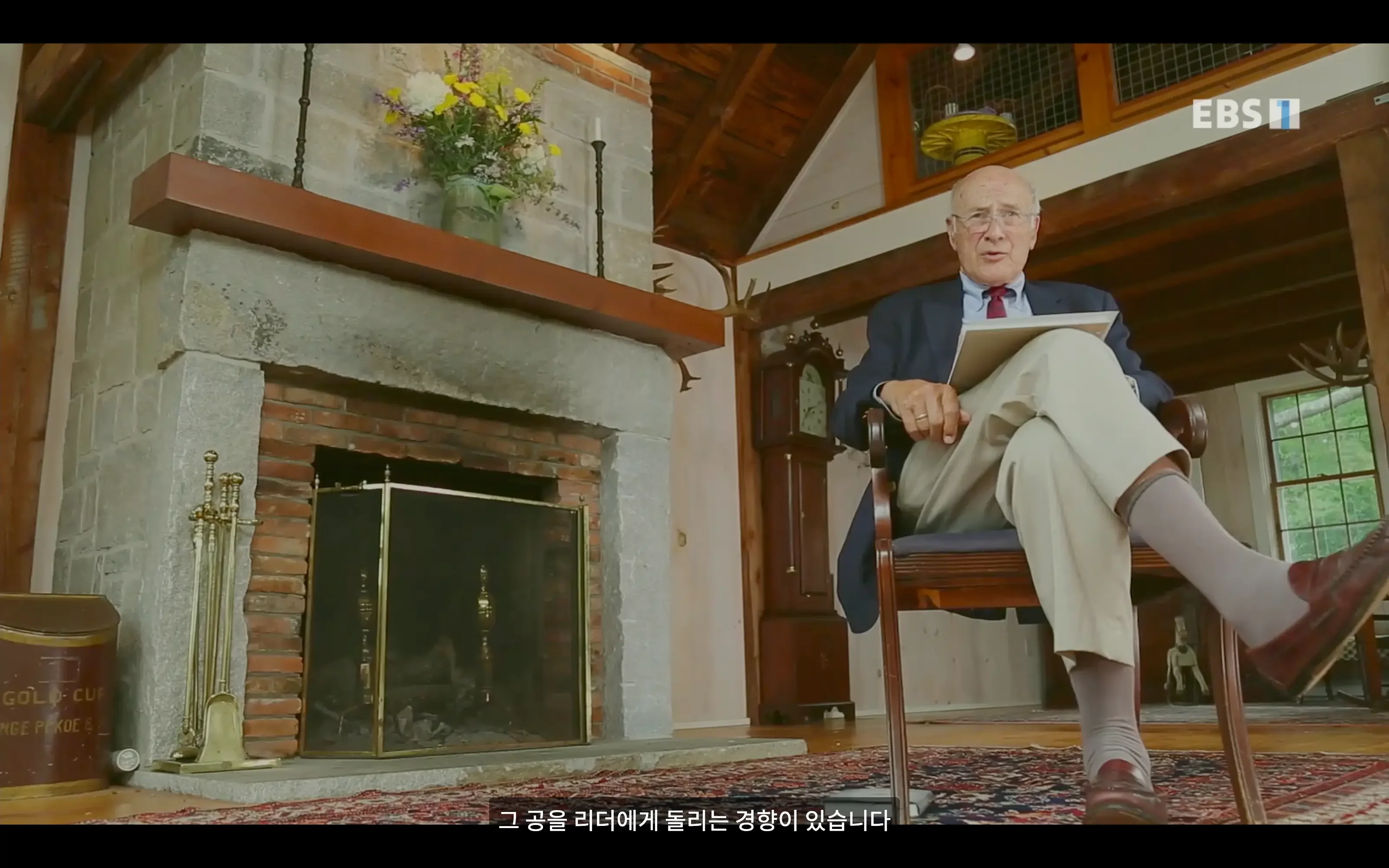
Joseph Nye - Who Is a Leader
- Lecture 1 How to Find a Leader
- Lecture 2 The Master of Power
- Lecture 3 The Art of Leadership (Part 1)
- Lecture 4 The Art of Leadership (Part 2)
- Lecture 5 The Morality of Leaders
- Lecture 6 Qualifications of a Global Leader
Lecture 1: How to Find a Leader#
Leaders are all around us (presidents, CEOs, chairpersons, class representatives, etc.). We sometimes have misconceptions about leaders.
Leadership attribution error: The success or failure of an organization doesn't always depend on the leader.
Many people tend to give credit to the leader when an organization succeeds.
When a company generates profit, people predominantly think it's thanks to the CEO, but typically a CEO's importance accounts for only about 10%~14%.
What followers want changes depending on the context (the era, environment, etc.). We don't actually know who a great leader truly is.
I: Winston Churchill was a necessary leader when fighting against Hitler, but after the war, Churchill lost the British general election. The public no longer needed him. This is similar to a startup founder who grows a company but gets ousted when the board brings in a professional manager because the direction no longer aligns.
The leadership skills needed differ depending on the leader — whether they lead a large corporation or a social movement.
3 Factors to Consider When Thinking About Leadership
- The leader's personal traits
- Followers: Without them, there is no leader
- Context: As context changes, what followers need changes, and the leader's personal traits become either advantageous or disadvantageous
Types of Leadership
Transformational leader: A leader who creates major changes — some transformational leaders even change the context itself
Transactional leader: A leader who accepts the context as-is and does their best within it
If we use weather as an analogy for leadership types:
Thinking about how to change the weather -> Transformational leader
Thinking about how to respond to the weather -> Transactional leader
Many people believe in the Big Man Theory of Leadership.
Big Man Theory: The idea that the biggest, most charismatic person in the group is the leader — a theory rooted in primate characteristics.
Determining leadership ability by genetics alone has only about a 1/3 probability, making it unreliable. Placing too much importance on physical size is a flawed way of thinking.
The old vertical, hierarchical leadership style of commanding subordinates has weakened. Today's society is built on horizontal networks, and leadership that manages networks well from the center of a circle is becoming more important.
A leader should not be a king on a mountaintop but the center of a circle.
Stereotypes that lean toward one extreme don't help us understand leadership. Men should learn to behave more like women, and women should learn to behave more like men.
The conclusion of Lecture 1 is to be cautious of stereotypes. Don't be swayed by simple categorizations — focus on the 3 factors of leadership.
Lecture 1 Summary#
Be cautious of stereotypes about leadership!
Leadership cannot be explained by the Big Man theory, genetics, gender, or other stereotypes.
What followers want changes based on the leader's personal traits, the nature of followers, and context.
The 3 factors of leadership: The leader's personal traits, followers, context
Lecture 2: The Master of Power#
A person without power cannot become a leader. Without followers, you're not a leader.
Power is far more complex and difficult than we think.
Power: The ability to influence others to get what you want.
Power is hard to measure, just like love.
There are 3 ways to get what you want from someone:
- Coercion and threats (the stick)
- Payment or inducement (the carrot)
- Attraction (soft power)
Getting what you want through sticks and carrots is hard power. If you have soft power, you can save on sticks and carrots.
If I can make the other person want what I want, then neither carrots nor sticks are needed.
Giving orders is very simple. We always do that. But getting someone to voluntarily do what you want — that is true power. - Dwight Eisenhower
Today's CEOs have both soft power and hard power. They have the power to adjust salaries, promote, or fire employees. But if they can instill a sense of mission so employees voluntarily work for the company, they can greatly reduce the need for coercive methods or paying incentives. That's why many companies are becoming less hierarchical and moving toward horizontal network organizations.
There's a very important difference between soft power and hard power: it depends on the observer — the followers.
With hard power, it's easy to take someone's money within minutes. Using soft power to take people's money is much more complex. You have to persuade people to voluntarily give their money. This process can take over a year.
Hard power takes less time and doesn't require the other person's agreement. Soft power takes longer and everything depends on what the other person thinks. Neither one alone is the right approach — both are important forms of power.
Followers also have power. Without followers, you can't be a leader. Whether followers are persuaded and voluntarily follow determines whether a leader rises or falls. The leader's power depends on what capabilities the followers bring.
No one can lead alone - David Hume
Followers are organized in concentric circles:
Leader > True believers > Simple followers > Casual joiners > Bystanders > Resisters
Among followers, the inner circle — the true devotees and genuine believers — are the most important to a leader. The leader is the dot at the very center, with believers nearby, but as the circle expands, simple followers, casual joiners, bystanders, and resisters appear.
Whether hard power or soft power, both can be used for good or bad purposes. Using them together is called smart power. You need the ability to choose and execute the right strategy to get what you want. Ideally, you should persuade others that you're doing good work, make them want to voluntarily follow you, give power to your followers, and simultaneously grow your own power through your followers. This is the secret of leadership and power.
Lecture 2 Summary#
Power is the ability to influence others to get what you want. Power exists not only in leaders but also in followers.
Soft power — The ability to shape the other person's preferences through attraction rather than coercion or threats. Power (hard power + soft power) can be used for both good and bad purposes.
In today's horizontal network society, both hard power and soft power are important. However, without followers, you can't be a leader, and power exists in followers too.
Soft power, which gives followers more choice, is more efficient than using hard power alone! An effective leader must earn followers who follow voluntarily.
Effective leadership requires smart power — a combination of soft power (attraction) + hard power (carrots and sticks).
The secret of leadership and power:
- Persuade your followers that you're doing good work!
- Make them want to follow you voluntarily!
- Give power to your followers!
- Grow your own power through your followers!
Lecture 3: The Art of Leadership (Part 1)#
Throw a child into a swimming pool, and they'll either sink or learn to swim.
Joseph Nye says he realized that just giving orders isn't enough — you need to present a vision and communicate so people want to follow you.
The 6 Skills of Leadership#
- Soft power: Emotional intelligence, vision, communication
- Hard power: Organizational management, Machiavellian strategy
- Smart power: Contextual intelligence
Soft Power#
Emotional Intelligence (Emotional IQ)#
People with high IQs don't necessarily have a higher chance of success after graduating and entering society. IQ correlated with success only about 20% of the time.
Emotional intelligence has two components:
- The ability to manage your own emotions: The ability to control emotions without being swept away by them.
When emotions interfere with our goals, we can learn to recognize or avoid that fact. - The ability to connect yourself with others: The ability to use your emotions to make others empathize with you, feel attraction toward you, and like you.
This is a critically important skill in leadership.
U.S. Supreme Court Justice Oliver Wendell Holmes assessed Franklin Roosevelt as "a second-rate intellect but a first-rate temperament."
President Roosevelt is remembered as a hero in American history, while President Nixon is remembered as a villain. This case shows that emotional intelligence matters more than IQ.
Vision#
Vision: Presenting a picture of the future that is meaningful and inspiring to others.
Vision inspires those you want to win over to your side. A great vision is very effective at capturing followers' hearts. A great vision doesn't just inspire — it also contains realism and prudence.
A vision must present inspiration + realism + prudence. No matter how impressive a vision sounds, one that drives followers off a cliff cannot be called great. A vision must be realistic enough to avoid disaster while inspiring enough to win people's hearts.
Communication#
I believe great leaders are great communicators.
I have a dream that one day this nation will rise up and live out the true meaning of its creed: "We hold these truths to be self-evident, that all men are created equal." - Martin Luther King Jr.
Beyond verbal communication, there are other forms of communication. Sometimes nonverbal communication wields significant influence. Gandhi wasn't great at speaking, but he was an outstanding leader in nonverbal communication.
Emotional intelligence, vision, and communication are all essential for getting what you want from followers.
Lecture 3 Summary#
Soft Power
- Emotional Intelligence (Emotional IQ): Divided into two categories — the ability to manage your own emotions and the ability to connect with others
- Vision: A picture of the future that inspires. A great vision presents inspiration + realism + prudence
- Communication: Not just the language a leader uses, but nonverbal communication is equally important
Lecture 4: The Art of Leadership (Part 2)#
Hard Power#
Organizational Management#
Organizational management skills: The skill of thoroughly managing information flow within an organization and rewarding various members.
This is an essential skill for succeeding as a leader. With excellent organizational skills, you can achieve better results. After using hard power, organizing the flow of information and sorting out the aftermath is actually the much harder task. The ability to manage information flow and reward flow with excellent organizational skills to control situations is an absolutely essential hard power skill.
Machiavellian Strategy#
Machiavellian political skill: Identifying the opponent's weaknesses and strengths, figuring out their likes and dislikes, and then appropriately leveraging that information to create a "minimum winning coalition" — making it so the opponent has no choice but to follow you.
This kind of strategy can sometimes instill fear. Machiavelli is the author of The Prince.
Hyman Rickover, the father of the nuclear submarine, used fear tactics to push and torment his subordinates while also instilling a vision of pursuing perfection. If you combine Machiavellian hard power skills with soft power skills, you can overcome the problems many coercive leaders face (the problem of hatred).
Smart Power#
Contextual Intelligence#
Contextual intelligence: The intuitive judgment ability to adjust tactics according to long-term strategy.
It's the ability to figure out how to effectively combine hard power skills and soft power skills for better results. It's an essential ability for understanding changing contexts. Some leaders excel in only one situation.
They fail to notice that the context has changed. A leader who did well in a vertical organization needs to adapt when moving to a horizontal organization, but problems arise when they insist on the old approach. No one is a born leader. Even Churchill worked hard to understand himself and studied history to understand others.
Studying history is the process of observing others' mistakes and learning from them. At the same time, you can discover commonalities in human behavior across long periods of time.
If you study in advance, you won't be caught off guard when a similar situation arises. You can anticipate what might happen and know how to respond. History serves as a crucial resource for exercising contextual intelligence.
The U.S. military created the slogan "Be, Know, Do" to train soldiers.
U.S. Army Leadership Principles (Be-Know-Do)
- Be: You must understand yourself and your emotional needs. Develop your emotional intelligence.
- Know: Gain insights through understanding others and past experiences.
- Do: Put it into action. After acting, conduct an after-action review.
- After-action review: Even if things went well, ask yourself what mistakes you made and what you could have done better.
By following this process and exercising contextual intelligence, you can become a more effective leader.
Lecture 4 Summary#
Hard Power
- Organizational Management: The ability to manage information and reward flows
- Machiavellian Strategy
- Maximally leverage the enemy's weaknesses and strengths, constructing a minimum winning coalition that makes the enemy follow you
- Machiavellian hard power + soft power (vision and communication) can make even coercive leadership succeed
- Contextual Intelligence
- The intuitive judgment ability to adjust tactics according to long-term strategy
- An essential ability for understanding changing contexts
- Exercising contextual intelligence and leveraging hard power and soft power enables effective leadership
U.S. Army Leadership Principles (Be-Know-Do)
Be (Develop emotional intelligence by understanding yourself and your emotions) -> Know (Understand others and develop through past experiences) -> Do (Put it into action, then conduct an after-action review)
Lecture 5: The Morality of Leaders#
The conventional binary thinking that separates interests and values is wrong. Values are also a type of interest. Values tell us who we are. Values are also a key factor that brings us benefits.
What matters isn't that a president declares they will protect the national interest — that's obvious. What matters is how they define the national interest. This is where the question of morality arises. The national interest must be defined broadly and expansively with a long-term perspective.
Donald Trump defined the national interest more narrowly and viewed diplomacy as a kind of transaction: "How much can I gain from this deal, and how much can the other side gain?"
Two-thirds of the population had received COVID vaccines, but Biden decided to supply COVID vaccines overseas for three reasons:
- Health impact. Vaccinating on a global scale reduces the likelihood of the virus affecting the U.S. if it surges again.
- Values. The U.S. helps poor people in poor countries.
- Soft power. By demonstrating moral values to capture followers' hearts, it provides geopolitical benefits.
You need to distinguish between morality and moralism. Moralism means saying fine words and pretending to do fine deeds when the reality is otherwise. Good intentions alone aren't enough. If you don't use the right methods and don't get good results, you've fallen into a trap.
When judging moral values, you should examine the 3 elements of morality:
- Are the intentions good?
- Are the methods right?
- Are the results good?
Integrating moral values, especially human rights issues, into foreign policy is extremely difficult, but denying them doesn't make the problem go away. You must publicly acknowledge the difficulty and the need for mutual compromise.
Lecture 5 Summary#
Soft power and moral values don't exist separately!
The core of protecting the national interest is defining it broadly and expansively with a long-term perspective.
Moralism — pretending to say and do 'the right thing' — is different from genuine morality! If the means and results aren't good, good intentions alone aren't enough.
The 3 elements of morality: 1. Are the intentions good? 2. Are the methods right? 3. Are the results good?
If you only have human rights policies and nothing else, it's not a properly prepared foreign policy!
Denying the difficulty of integrating moral values and human rights doesn't solve the diplomatic dilemma -> The difficulties of foreign policy must be made public, and the need for mutual compromise must be raised.
Lecture 6: Qualifications of a Global Leader#
In the international community, the U.S. has played a leading role. It established what's called the liberal world order.
If the largest country doesn't provide global public goods, nobody will. Global public goods are benefits given equally to everyone, with nobody excluded.
After Donald Trump became president in 2016, he rejected the liberal international order. Trump believed that the U.S. providing global public goods meant other countries were taking advantage of America, and that if he forced other countries to pay more, the U.S. would be better off. Trump's perspective was a very narrow view of a transactional leader.
Russia is a declining power because its population is shrinking.
I: Our country is in a similar situation. It turns out population decline is an extremely important factor in national competitiveness. With fewer people comes less power, and major powers probably won't offer favorable treatment either.
The U.S. must fulfill its traditional leadership role by protecting allies, but at the same time, it must also cooperate with China. Mutual cooperation is absolutely necessary to solve newly emerging global problems.
Lecture 6 Summary#
The past Cold War era was a binary world of good and evil, but the 21st-century international community requires a new form of mutual cooperation called ecological interdependence. Example: Climate change — no single country can solve it alone.
In this era of mutual cooperation, America's role in the 21st century: 1. Protect allies, 2. Cooperate with China.
Both traditional geopolitical competition and new mutual cooperation can succeed.
The secret to success for 21st-century global leaders:
- Use smart power
- Combine hard power and soft power appropriately
Gold medals aren't really made of gold. They're made of sweat, determination, and a hard-to-find alloy called guts.
— Dan Gable