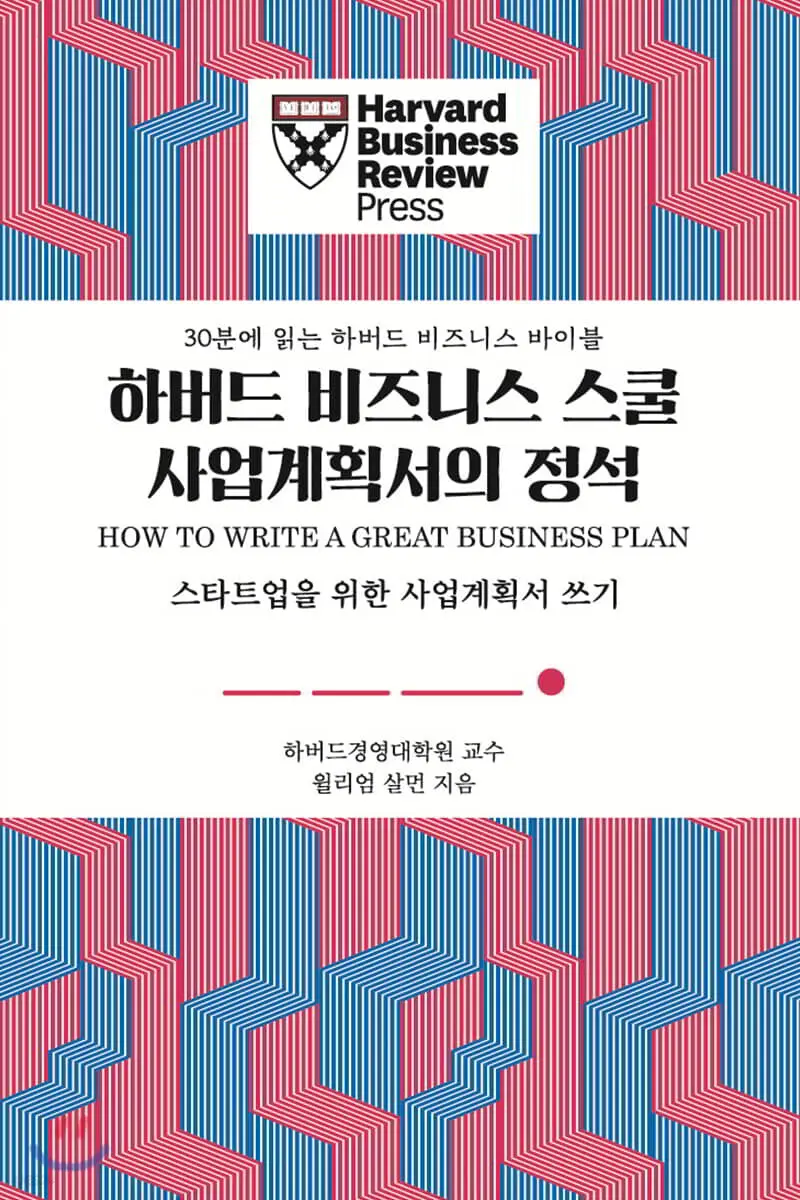
I had no idea this book would be this small before purchasing it. How small? It's less than half the size of an iPad Pro 12.9.
Also, while it was published in Korea under the title "The Definitive Guide to Harvard Business School Business Plans," its actual name is HOW TO WRITE A GREAT BUSINESS PLAN (there's also a version provided by Harvard, but it has a watermark, so I'm substituting this one). I found out after purchasing that you can find the original English text by searching for this on Google.
What I had actually expected was to learn a more standard approach, since I had only written government-supported business plans at the pre-startup stage. I wanted to learn the practical methods commonly used domestically and internationally, but this book talks about the fundamentals.
However, it was a book that helped me train my mindset and attitude toward business by introducing several things of important value. In truth, when running a business, there will always be things you overlook. Some people make slow decisions because they're busy finding and worrying about what they're missing, while others execute quickly for success. These days, people say the latter approach is better, but I don't think it always works. The reason professional managers become CEOs after an IPO or when a company becomes a conglomerate is that they can reduce the possibility of failure. In reality, bringing in professional managers is limited to startups that have survived, so the mindset that pre-startup and early-stage entrepreneurs should have is to execute quickly and experience failure often. Most people deliberate carefully. Because their life is on the line with this business.