Why I Read This Book#
I picked this book because I wanted to study and better understand computers.
As a developer, I had only been exploring the software side, so I became curious about how the hardware works and started reading. There are many components that make up a computer—transistors, gates, CPU, DRAM, GPU, etc.—and this book was great because it explains everything by building up from the most fundamental units, like constructing a castle brick by brick.
While Reading#
The more I read this book, the more I could tell how hard the author worked to explain concepts and hardware operations in an accessible way. It even made me feel good while reading.
People generally don't know how registers, CPUs, RAM, and such things work, and they find it hard to understand their operating principles.
Even though these aren't modern devices, I was able to learn how internal gates are connected by building each component from very small units.
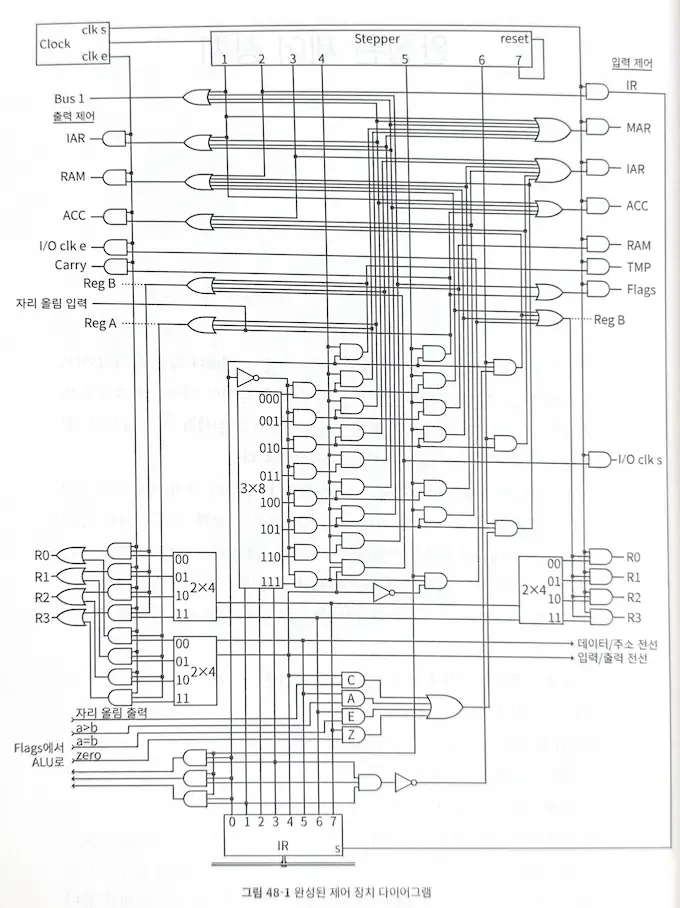
The book shows an example of building an 8-bit control unit, explaining each component that goes into it—clock, ALU, and more—one by one. The image above is the completed control unit example. Even a tiny control unit has incredibly complex circuitry, which made me wonder what today's 64-bit CPUs must look like. I couldn't seem to find any YouTube videos showing Intel or AMD chip circuits though.
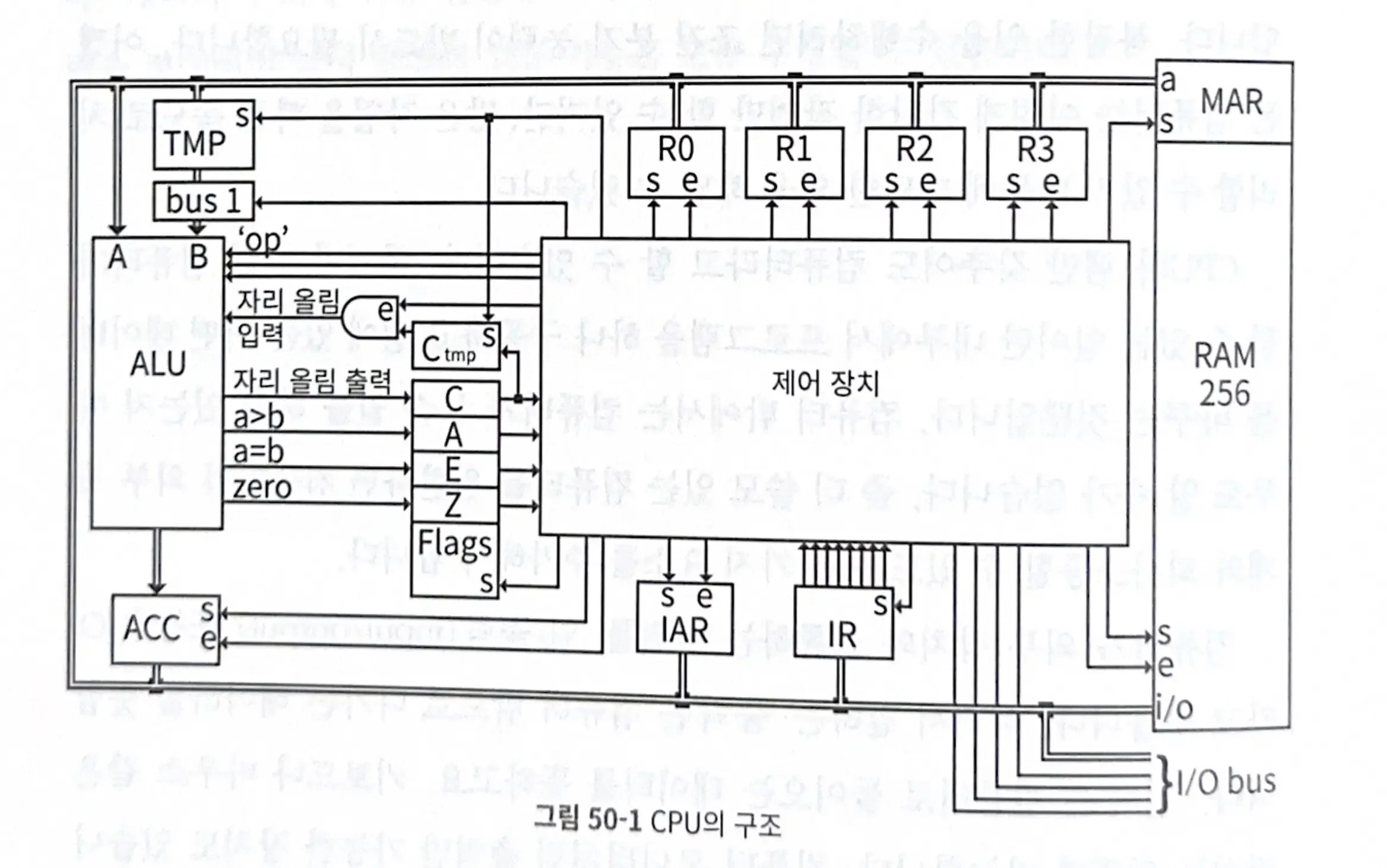
The image above shows an 8-bit CPU that includes the control unit. Rather than showing this all at once, the book explains each component one by one. While I didn't understand everything completely, the explanation was so thoughtful that it gave me a warm feeling. Of course, the book notes that this circuit diagram may differ from actual CPUs in its components, but it states that it can perform the operations that function as a computer.
After Finishing#
For me, things got difficult starting from the CPU design section. Up until then, I could visualize things in my head and understand each operation step by step, but once buses were connected and data started moving around instantly, looking at the circuit diagrams with all the devices in the CPU and the bus connections made me dizzy. I couldn't easily picture in my head where and how things were connected.
I think watching YouTube - How Does a CPU Work? could help deepen understanding.
It got tough midway through, but after finishing, I think it's a book worth revisiting when you have time. Since it covers fundamental hardware content, it explains essential knowledge not in the dry manner of a textbook but with incredible care at every step, which I really appreciated.
It was a difficult and complex book, but if I were to leave a one-line review:
It's such a warm book.
What I felt while reading this book was like hiking a mountain. It was truly hard to read page by page, and it always felt like the summit was still far away, but when I looked back, I had come so far that I could gather strength to keep going.
If you're interested in computers or want to learn about them, give this book a read. It might not directly help with the problem you're struggling with, but it could broaden your perspective to see the problem from a different angle.