Watch the Lectures#
Steven Pinker - Fact Bombing
- Lecture 1 Is the World Getting Worse?
- Lecture 2 The Bad News That Seduces Us
- Lecture 3 Why We're Drawn to Violence
Lecture 1: Is the World Getting Worse?#
Lecture 1 examines the real state of the world through data alongside Steven Pinker — covering life expectancy, wealth, peace, freedom and human rights, and even the COVID pandemic that struck in 2020 and 2021.
What is progress? Is there a definition people would accept? I define progress as human flourishing. What constitutes human flourishing? When we think of well-being indicators — life expectancy, health, livelihood, wealth, peace, freedom, safety, knowledge, leisure, happiness — if these things have increased, that's progress.

Let's start with the most important one: life expectancy. For most of human history, life expectancy was about 30 years. After the Industrial Revolution, public health and medicine advanced and agriculture grew significantly, so today human life expectancy exceeds 72 years. The more developed the country, the higher the life expectancy.
Poverty is actually the default state. Being wealthy is what's unusual. Humans in their natural state are poor. For most of human history, economic growth was rare. Thanks to advances in technology, energy storage, finance, economics, insurance, and transportation, global GDP surged. Today's global GDP is hundreds of times higher than 200 years ago. As a result, the proportion of extreme poverty has decreased dramatically worldwide. Just 200 years ago, about 90% of the world's population lived in extreme poverty. Today, the extreme poor are less than 9%. The UN committed to completely eliminating extreme poverty worldwide by 2030 as part of its sustainable development goals.
We constantly fear ongoing wars. But for most of human history, war was natural. Many nations and regions were always at war. Peace was merely a brief pause between wars. After World War II, the number of people dying in wars began to decline. We are currently living in the era with the fewest war deaths in history.
Freedom and human rights have also advanced. While democracy is continually threatened in many countries, we can see that we're more democratic than at any point in the past decade.
Looking at many indicators, I hope you'll see that progress has actually happened. In my book "Enlightenment Now," I argued that the reason, science, and humanism that have developed since the Enlightenment 250 years ago drove this progress.
Understanding the world accurately is the best thing. When danger, suffering, and injustice occur, we should certainly recognize them. But we also need to know how to solve those problems. We must be careful not to fall into pessimism — we shouldn't say or act as though no matter how hard we try to make a better world, we'll keep failing, so let's not waste time and money on hopeless causes.
Pessimistic fatalism is dangerous, but so is radicalism. The philosophy that expected to tear everything down and start from the ashes has historically unleashed tremendous violence.
Progress doesn't mean everything always gets better. That phenomenon would be a miracle, not progress. Progress is not a miracle. Progress uses knowledge to solve problems. Problems always arise. And sometimes the solution to one problem creates new problems.
Terrible problems still remain today. Progress isn't perfect. But the existence of remaining problems doesn't negate progress. Past problems were even worse than today's. Franklin Pierce said: "A happy past is thanks to bad memory." Finally, progress isn't natural — it doesn't happen by itself. Progress is the result of using knowledge for human flourishing. If we commit to reason, science, and humanism, progress will continue.
Lecture 1 Summary#
Definition of Progress
- Human flourishing -> If well-being indicators increase, that's progress
- Data proves the reality of progress
- Progress means using knowledge to solve problems
Well-being indicators that prove progress:
- Life expectancy
- Global GDP has increased 100x+ compared to 200 years ago
- Proportion of extreme poverty has dramatically decreased
- Peace: Recording the lowest war death rates in history (less than 1 per 100,000)
- Freedom & Human Rights: Recording the highest democracy index compared to the past decade
Dangers that obstruct progress:
- Fatalism: The idea of not wasting time and money on a hopeless future
- Radicalism
- The belief that we can tear everything down and start over
- Extreme radicalism is accompanied by violent extremism
- Infectious diseases (COVID pandemic)
- Infectious diseases have coexisted with humanity throughout history (Black Death, smallpox, Spanish flu, AIDS, COVID, etc.)
- Cause of declining life expectancy -> Temporarily delayed progress
Defenses against infectious diseases:
- Advances in reason, science, and humanism (vaccines, antibiotics, hygiene management, etc.)
- Human evolution and technological progress have contributed to reducing infectious disease deaths
- Civilization's progress has progressively shortened the time to end pandemics
Steven Pinker's conclusion:
- Progress is a real phenomenon
- Not rose-tinted optimism
- Data proves that humanity has progressed
- Progress isn't perfect, but humans cannot deny progress
Lecture 2: The Bad News That Seduces Us#
Lecture 2 explores the psychological reasons why we're drawn to bad news and discusses how to escape from it.
If you asked someone what era they'd choose to be born in, they'd say right now. But many people think we're living in a terrible era. Journalism's distortion plays a big role in that. We don't know what will happen, but no matter how much better the world gets, disasters still occur and become the news.

News is a curated collection of the worst things happening on the planet. News only talks about things that happened. It doesn't mention things that didn't happen. If there's no incident, it can't become news. In other words, news inherently tends to show bad events. Focusing on chaotic events rather than peace — this is the innate bias of news. Most breaking news stories are about bad things.
Good things usually take a long time to happen. They improve gradually over time. To understand the world, we need to know exactly what's going well and what's going wrong. Can you objectively answer whether the world has gotten better or not? My personal positive or negative tendencies shouldn't obscure the truth about the world. The point is that we need to focus on data, numbers, and facts. The world has improved far more than our common beliefs suggest. Wrong beliefs probably formed because we only watched the news instead of looking at data.
There's a phenomenon in psychology called negativity bias. We pay more attention to what went wrong than what went right, and the hurt from criticism is greater than the joy from praise. In fact, our language has more words expressing negative emotions than positive ones — because we need to be able to recognize when something goes wrong. But this tendency can also obstruct the human ingenuity and action that have driven the world forward.
There's also a phenomenon called availability bias, discovered by psychologists Amos Tversky and Daniel Kahneman. Instead of using objective data like frequency or risk level, we tend to judge the likelihood of events subjectively. We assess the probability of events differently based on how easily they come to mind.
When we see a news article about someone being bitten by a shark, we start thinking we're at high risk of being bitten by a shark too. But though it rarely makes the news, far more people actually die from traffic accidents. Respiratory diseases and other accidents are much more dangerous, but since we can't easily recall them, we think they can't happen.

We also tend to view critical and aggressive people as more sophisticated and intelligent than positive people. That's because we value people who warn us about danger. That's just how human psychology works. But because of this, we might ignore or deny humanity's progress — something that can only be confirmed through data. What matters is understanding the world's trends based on what actually happened. We shouldn't be swayed by specific events, because no single event can represent everything happening in the world.
We've come up with various solutions to make a better world and have succeeded. We live longer than before, and poverty, disease, illiteracy, and war have decreased. What we need to know is that human action can make the world a better place. I think the media should use more data and statistics. In my experience, most journalists are idealists who want to awaken the public. Journalists genuinely want to enlighten people.
Only an informed public can defend democracy and contribute to humanity's progress. I think journalists should have a deeper sense of responsibility in providing data and overall trends. To avoid falling for the misunderstandings and distortions caused by journalism, we need to pay more attention to overall trends — because humans instinctively believe that what they see and remember happens frequently. Of course, we need to examine data carefully too. It can be manipulated.
When obtaining information, it's important to get data from multiple sources so you can compare them, rather than relying on a single website or newspaper. We also shouldn't understand the world based solely on knowledge from social media. Social media algorithms don't focus on accuracy or truthfulness — they're designed to generate clicks and keep users engaged. We can only reach the truth when institutions designed to pursue truth exist.
As individuals, pursuing truth isn't easy. We distort facts, misremember things, and look through biased lenses. We can face the truth because institutions exist that minimize bias.
Democratic governments have a system called separation of powers — if an unconstitutional law is passed, courts can strike it down. Even the government is under the oversight of people who can strip its power. In courts, prosecutors and defense attorneys balance each other. Journalists don't just publish their drafts — editors first verify whether the reporting is sufficient and the facts are accurate.
These institutions that review the truthfulness of information and offer differing opinions provide us with opportunities to see reality correctly. We must understand this world based on facts and data. None of us knows everything. Our knowledge is always incomplete, and even historical records aren't entirely accurate. Still, incomplete knowledge is better than dogmatic claims. If we act recklessly, things will only get worse — because there are more wrong answers than right ones.

There's no other way. We must try our best to understand the world. And we must always remain open to the possibility that we might have made mistakes.
Lecture 2 Summary#
News bias
- Inherent bias toward reporting bad news
- News bias -> Breeds indiscriminate pessimism
- Objective judgment, free from biased media, is needed
- Individual subjectivity makes it hard to tell the truth
- Focus on objective data and numbers
Why we're drawn to bad news:
- Negativity bias: The tendency to focus more on bad events than good ones
- Availability bias: The tendency to judge the likelihood of events subjectively
Institutions that counter bias are needed for pursuing truth (opportunities to perceive reality correctly)
What journalists need:
- Use more data and statistics
- A deep sense of responsibility when providing information
Why fact-checking is necessary:
- Data can be manipulated
- Incomplete data causes misunderstanding
- Cross-verification of data is necessary
The way to understand the world = Constant questioning + Acknowledging human imperfection
The only way to advance the world = Understanding the world through data
Lecture 3: Why We're Drawn to Violence#
Lecture 3 explores human nature regarding violence and seeks ways for humanity to coexist peacefully through methods of controlling violence.
Humans enjoy violent scenes. It's our entertainment. We pay money to see someone killed. Shakespeare's works are like that, and so is the Bible. It's in mafia movies, war movies, spy movies, and Greek tragedies.

We want information about violence. That's probably because violence has always existed throughout human evolutionary history. Even the smallest danger becomes a catastrophe once it happens — you could die. Those who know how violence occurs, how to defend against it, and how to counterattack have a survival advantage. The human brain is instinctively drawn to violence, which ultimately created a massive entertainment industry.
Human history is a history of violence. But most of us aren't violent. The human brain is truly complex. It possesses both the motivation for violence and the motivation for peace and cooperation.
Let's look at three violent motives: exploitation, dominance, and revenge.
Exploitation: You might covet someone else's land. You might kill the owner to take it, without caring about their situation. You might also commit murder for property or women.
Dominance: Sometimes people want to be above others. They want power, status, or fame.
Revenge: When one person harms another, the victim thinks they have the right to revenge.
On the other hand, we also have non-violent instincts. We care about others' happiness and are upset by their suffering. We also have self-control. We have reason and knowledge, giving us the ability to hold back, step away, and reconsider. We think the problem of violence needs to be solved and believe there's too much crime and war in the world. We devise ways to reduce violence. We also have moral sentiments — there are certain things a good person wouldn't do, and violence is one of them.
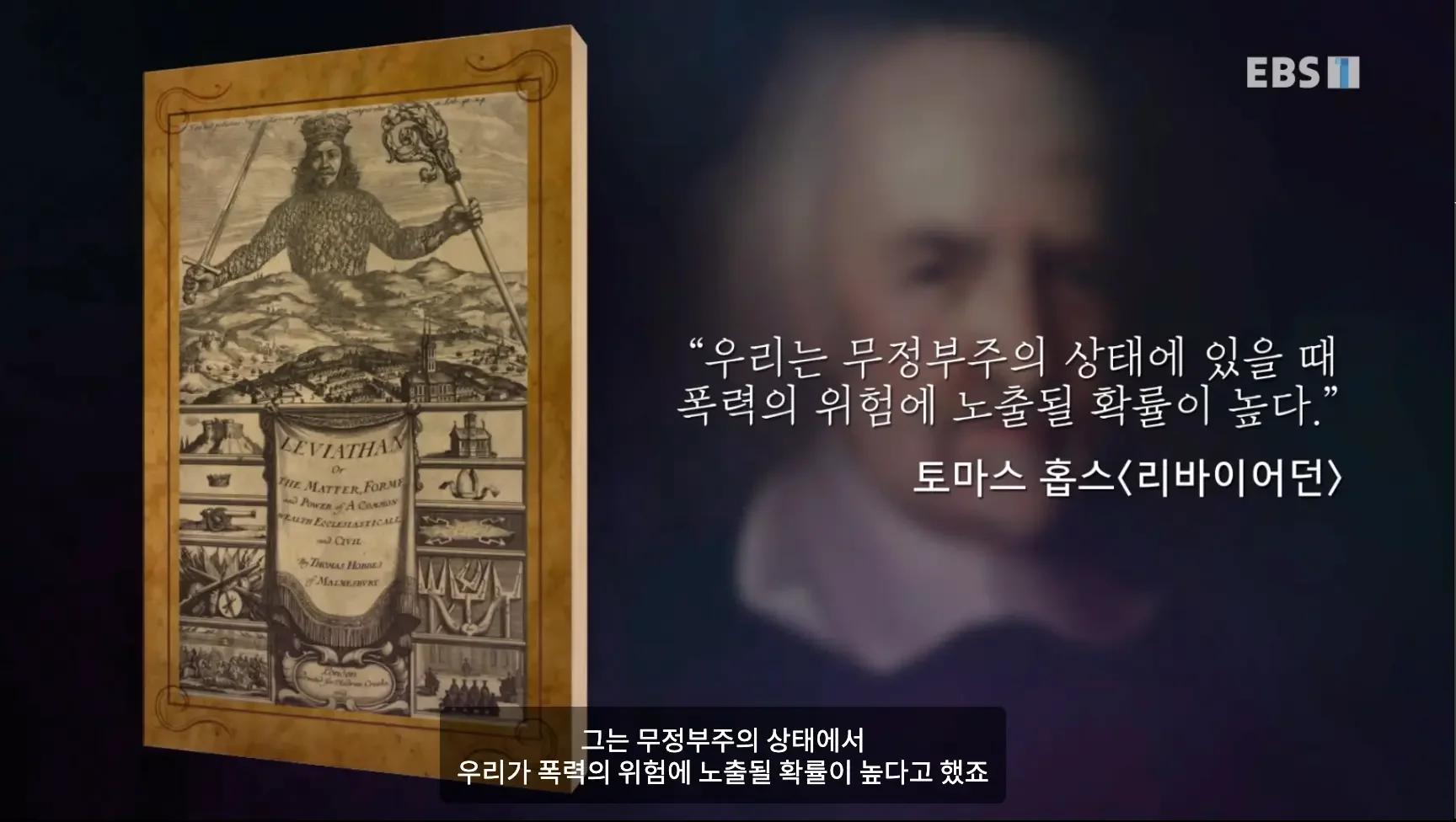
So how can we control violence? It's not because we're inherently evil that we commit violence — it's because we feel fear. For example, you might think "I'll attack first because I'm afraid my neighbor will attack me." Or if someone threatens or insults you, you might retaliate to show you're not a pushover, to prove your strength.
Like this, even without an evil nature, violence is really easy to trigger. How on earth can we stop it?
By creating institutions like governments that restrain people from fighting each other and making private violence illegal, individuals, groups, and local communities will stop attacking each other — because those who use violence will be punished. Looking at areas currently in anarchy, you'll see that attacks, retaliatory strikes, revenge, and brutal crimes and feuds run rampant. The conflict resolution method of revenge has been replaced by courts, police, and judicial systems.
However, while this approach prevents people from attacking each other, it couldn't prevent government institutions from attacking people. There's also the risk of governments oppressing their citizens. That's why we support democracy — it serves as a safeguard against the violence of dictatorship where governments oppress citizens.
Peace is not a given. Neither are safety and order.
There have always been people who try to take things from others. Retaliation and revenge always followed. To achieve peace, we need institutions — institutions that guarantee greater benefits through cooperation rather than exploitation. Trade and commerce are such institutions. There's no reason to kill your customers. If buying is more advantageous than stealing, people will prefer commerce over violence.
If we understand each other better and empathize more, we'll realize that the other person is someone just like us. If we can think from the other's perspective, we'll try to treat each other fairly and won't try to exploit. We need to reform our laws, society, norms, philosophy, and religion to make peace more desirable and lasting.

The rules and norms that righteous people prefer are exactly these kinds of things. All of these will help us suppress the evil within us as much as possible and let our good nature prevail.
Lecture 3 Summary#
Human history is a history of violence
- Fear, not evil nature, is the reason for human violence
- Endless cycles of violence cause wars
Motives for violence: Exploitation, dominance, revenge, ideology
Leviathan
- A sea monster from Job 41 in the Old Testament
- Symbolizes a powerful creature beyond human strength
- Represents governments, kings, or parliaments that prevent human violence
Solutions for violence:
- Minimizing conflict and violence within communities through government establishment
- If the government makes violence illegal, individuals and groups reduce aggressive behavior
- The more anarchy without dominance or authority, the higher the crime rate
Government side effects:
- Conversely, governments may also oppress citizens
- Government control should be limited to protecting citizen safety
- Democracy that doesn't tolerate oppression of citizens
Institutions for peace are needed. There must be institutions that guarantee greater benefits for the majority through cooperation.
Institutions that drive cooperation:
- Trade and commerce
- Rules
- Objective and neutral third parties, e.g., UN
Why fact-checking is necessary:
- Law, society
- Norms
- Philosophy, religion
Human nature seeking progress can't be changed overnight. But solutions can be found in institutions, knowledge, norms, and law.
What you do not want done to yourself, do not do to others.
— Confucius