Watch the Lectures#
Richard Dawkins - Evolution You Didn't Know About
- Lecture 1 Why Is Life Complex?
- Lecture 2 Is There a Designer in Our Bodies?
- Lecture 3 The Secret of Wings
- Lecture 4 Imperfect Design
- Lecture 5 The Magic Called Science
Lecture 1: Why Is Life Complex?#
Richard Dawkins is a person passionate about science and clarity. He doesn't want to pretend to be profound.
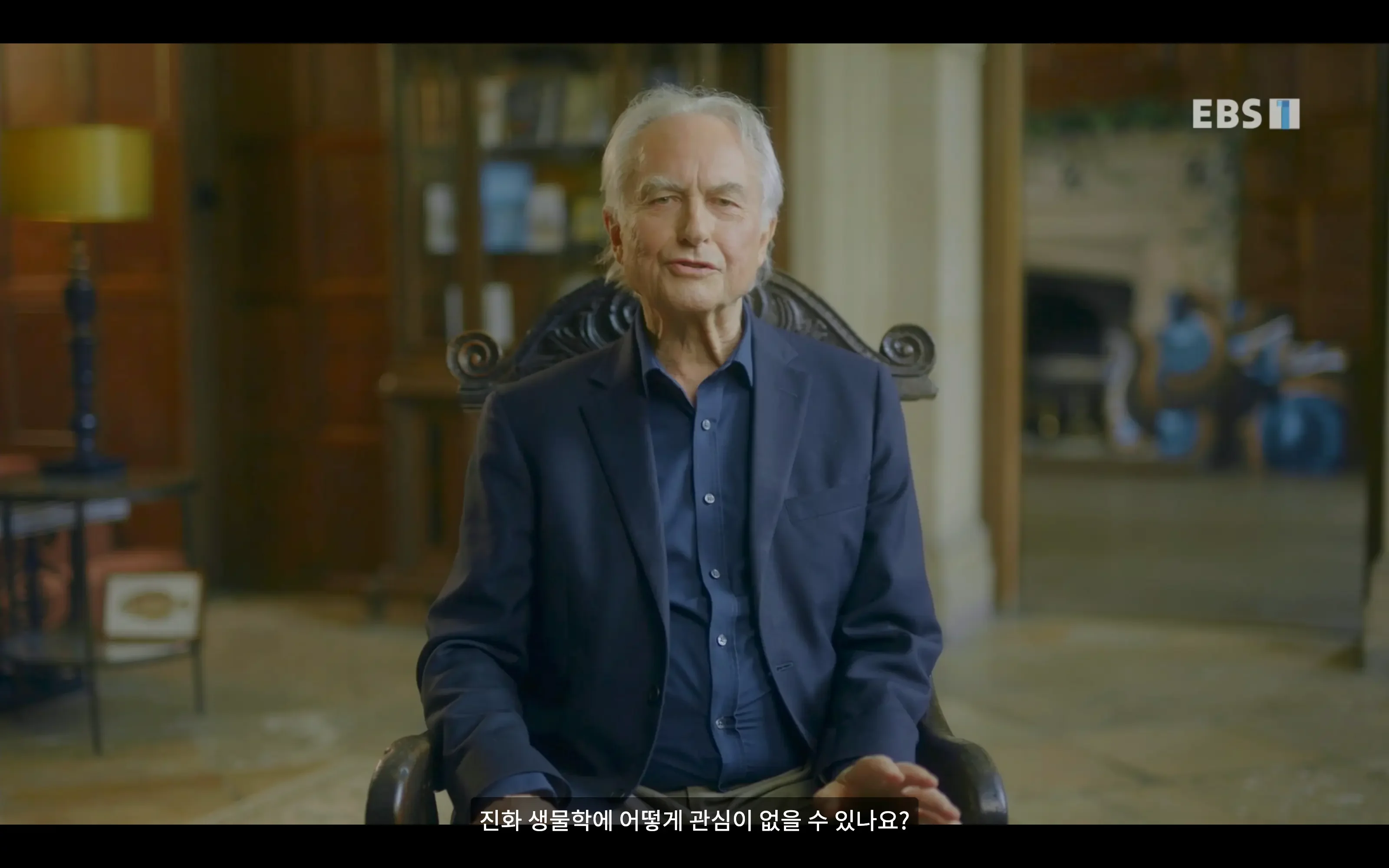
Evolution shows us the complex and beautiful characteristics of life that look as if someone designed them.
Why is life so complex? Because it has to survive.
Competition for food advantage means predators and prey, parasites and hosts all need to stay one step ahead of their competitors. There's also same-species competition where members of the same species fight over mates.
This arms race and intraspecies competition mean animals must evolve to become increasingly complex.
Complexity is the characteristic that distinguishes living things from non-living things.
Color is an important factor for animals. Animal coloration plays an important role in camouflage, avoiding detection by predators, or sending warnings to others.
Questions about the origin of life that still make Dawkins's heart race:
- Why are living things so complex?
- Why do so many different animals exist on Earth?
Lecture 1 Summary#
Biology -> The study of the complexity of life
Life's complexity -> The criterion distinguishing living from non-living things; survival instinct
The trigger for life's complexity and diversity -> Evolution from single-celled to multicellular organisms
Life's complexity and diversity -> Explained by Darwin's
Why life exists:
- To pass genes to future generations
- Constant competition for survival (e.g., cephalopods changing color)
- Intraspecies competition for mating
Darwin's Theory of Evolution -> Explains the origin and existence of all life on Earth
- "Only those favorable in the struggle for survival will survive."
- Economist Thomas Malthus's 'An Essay on the Principle of Population (1798)' and biologist Alfred Wallace's independent discovery inspired the theory of evolution
- In 1858 at the Linnean Society of London, 'Evolution by Natural Selection' was jointly presented by Alfred Wallace and Darwin
- One year later, Darwin published 'On the Origin of Species' compiling comprehensive evidence for evolution
Lecture 2: Is There a Designer in Our Bodies?#
How do cells develop into living organisms?
Cells are built through a bottom-up design process.
Living organisms use bottom-up design: During embryonic development, all cells follow simple rules while the body is designed from the bottom up.
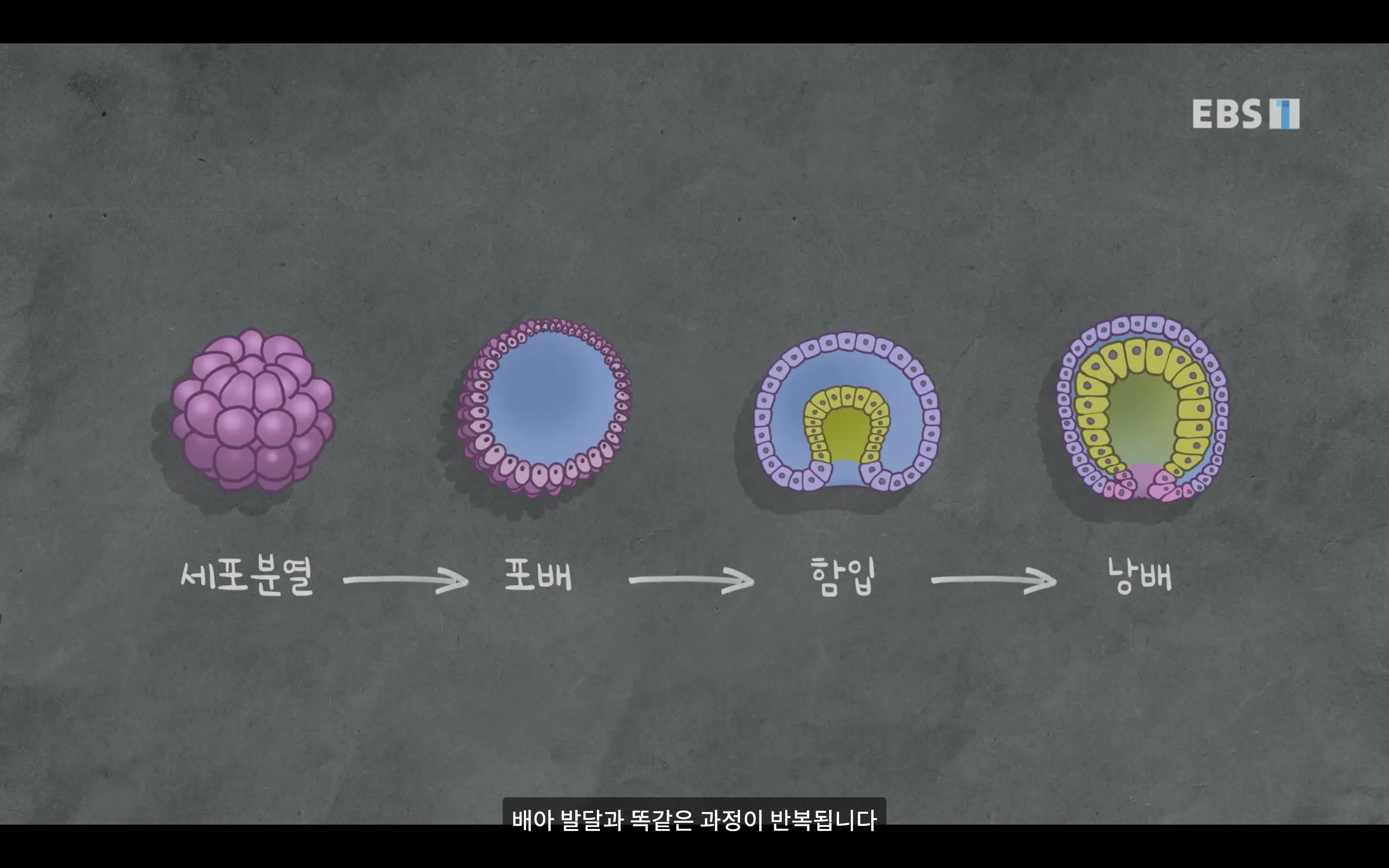
A single cell divides continuously, splitting further and further. The cells then form a ball-shaped blastula the size of the original egg. A hole forms in the ball and cell walls fold inward in a process called invagination. This is how the gastrula forms. After gastrulation, a similar process forms the neural tube. The same process as embryonic development repeats while this cell layer forms the neural tube. You can see that bottom-up design applies throughout this process.
Each cell's behavior is determined by DNA, and cells act in ways that develop the embryo.
DNA carries out the process of protein synthesis. Three DNA bases form a codon that specifies one amino acid. DNA chains in the genome form amino acid chains, which in turn create proteins.
If there's no designer, what designed humans?
There is no such designer. Our bodies emerge through a series of interactions from DNA to proteins to catalysts between cells. They emerge bottom-up. They just came into being.
Lecture 2 Summary#
Why DNA is not a blueprint — DNA cannot be reversed!
- Knowing body structure doesn't reveal the DNA containing genetic information
- DNA is similar to a recipe listing steps in order
Bottom-up design: A method where structures are built by small rules
Top-down design: A method where structures are built from a designer's blueprint
Living organisms -> Bottom-up design (every developing cell follows small, partial rules)
DNA determines all cell behavior:
- Determines cell behavior
- Cell interactions -> Act in embryonic development patterns
- DNA genes express differently in different body parts
- Programs protein synthesis
- Amino acid chains -> Protein creation
- Amino acid chains coil into specific shapes, forming knots
- Amino acid chains tangle and intertwine forming 3D proteins
- The 3D structure of proteins -> Determines enzyme (catalyst) properties
- Enzymes (catalysts): Substances that don't directly participate in chemical reactions but speed them up
- Reactions between chemical substances in cells -> Determined by specific enzymes
- What determines specific enzyme and cell reactions -> DNA
- Gene activation -> Specific protein formation -> Enzyme property determination -> Cell behavior determination
- Cell behavior -> Determines how it interacts with other cells
There is no designer of life!
- Beauty and complexity of living organisms are generated without a designer
- Only interactions between cells complete living organisms
Lecture 3: The Secret of Wings#
Have you ever dreamed of flying? Gliding through trees and soaring through the sky feels amazing.
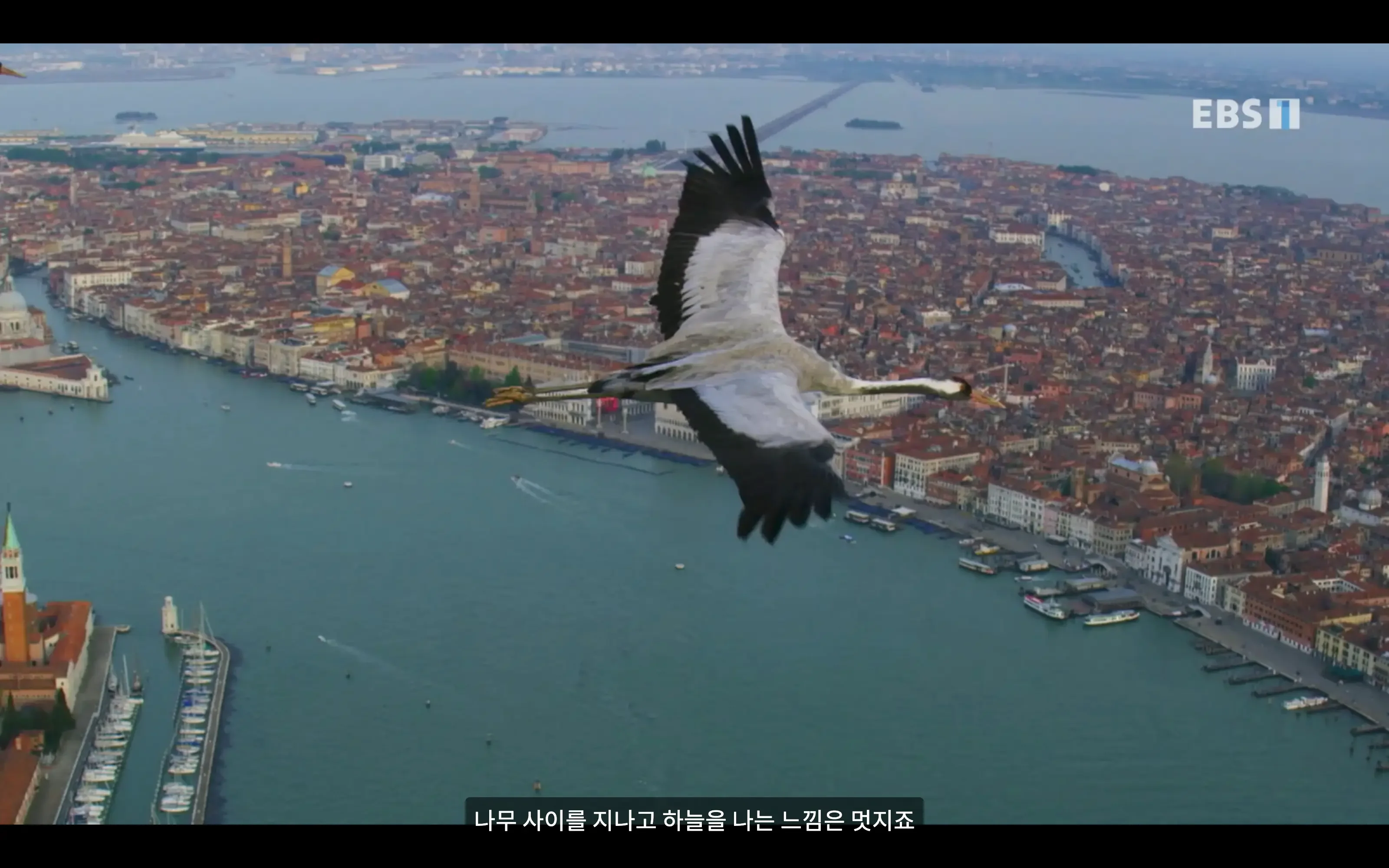
Flight is an enormous challenge. It's not just limited to animals — it applies not only to insects, pterosaurs, bats, and birds, but to humans too.
We know through history that humanity has always dreamed of flight. But humans are too large to fly.
The conditions for human flight are difficult. We're heavy, would need enormous wings, and would need a lot of muscle to fly. So instead of flapping wings, we have to use other methods.
Thermals: Rising air currents caused by heat movement. Cold air comes in from below and pushes hot air up, creating lift.
When birds aren't flapping their wings, they're using thermals to glide.
If you want to fly without thermals, you need thrust to push forward. That's the principle behind airplanes. Aircraft engines push the body at high speed. The engines create tremendous wind, generating lift in two different ways.
Birds and insects fly by different principles. Insects can fly without muscles that raise and lower their wings. Part of their thorax extends outward and is modified. Muscles in the chest move the wings. Most insects use flight muscles that vibrate.
Some animals can fly even without wings, gliding using membranes.
There are also animals that can no longer fly. These are called ratites (birds with flat breastbones and vestigial wings that cannot fly). Social insects like worker ants have also lost their wings.
We must move beyond the mythological dream of floating among clouds.
Is flight a useful ability for everyone? Wings aren't fantasy and longing. They were simply a method of reproduction and survival.
Lecture 3 Summary#
Conditions for flight:
- Small size
- Increased surface area
- Wings
- Sufficient muscle mass and gliding ability to move wings
Wings are a method of reproduction and survival!
- Wings also evolve through natural selection in new environments
Lecture 4: Imperfect Design#
The wondrous and elegant characteristics of life are all attributed to natural selection.
Every part of a living organism appears to have purpose, as if designed.
Random changes in genes are mostly harmful — they hinder survival and reproduction. Only a small fraction are beneficial. A tiny number of mutations help with survival and reproduction, and those survive. That's natural selection.
The cause of variation is random genetic mutation. During DNA replication, errors randomly change genetic information. Which genes survive is NOT determined randomly. Genes are selected according to clear criteria, a process that drives better survival and reproduction.
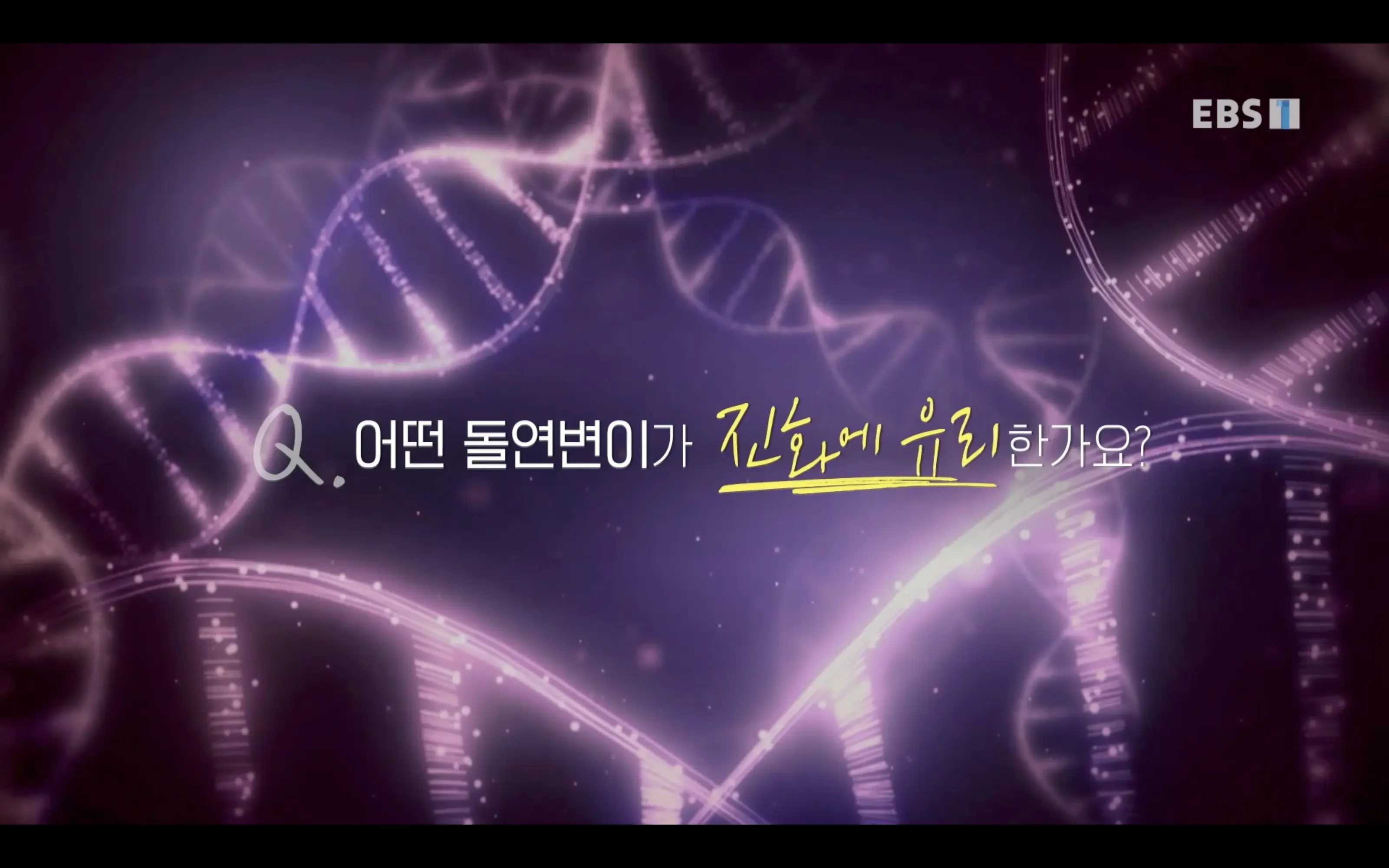
Geneticists study large mutations, but in evolution, large mutations aren't important. Large mutations are more likely to be harmful. If a surviving parent's offspring has a large mutation, a child that greatly deviates from the parent's current state may face great difficulty surviving.
Lecture 4 Summary#
All plants and animals on Earth evolved by Darwin's
- Random genetic mutations
- Mostly disadvantageous for reproduction
- Only very few mutations survive
Gene survival is not determined randomly; the smaller the change, the closer the organism gets to perfection
- Large mutations are not important in evolution -> Harmful to survival
- Small mutations are important in evolution -> Favorable for survival
Design -> Not perfect in every way, and evolution cannot start over
- Gradual improvements accumulate from existing variations
Why perfection and imperfection coexist:
- In the world of evolution, imperfection is unavoidable (e.g., the inverted retina, the recurrent laryngeal nerve)
- Compromise between different pressures through natural selection
- Reproduction vs. survival, cost vs. benefit — all life cannot avoid 'evolutionary compromise'
Lecture 5: The Magic Called Science#
Why can't the supernatural explain reality?
The supernatural can't explain anything. Reality is everything that exists. We need explanations grounded in reality.
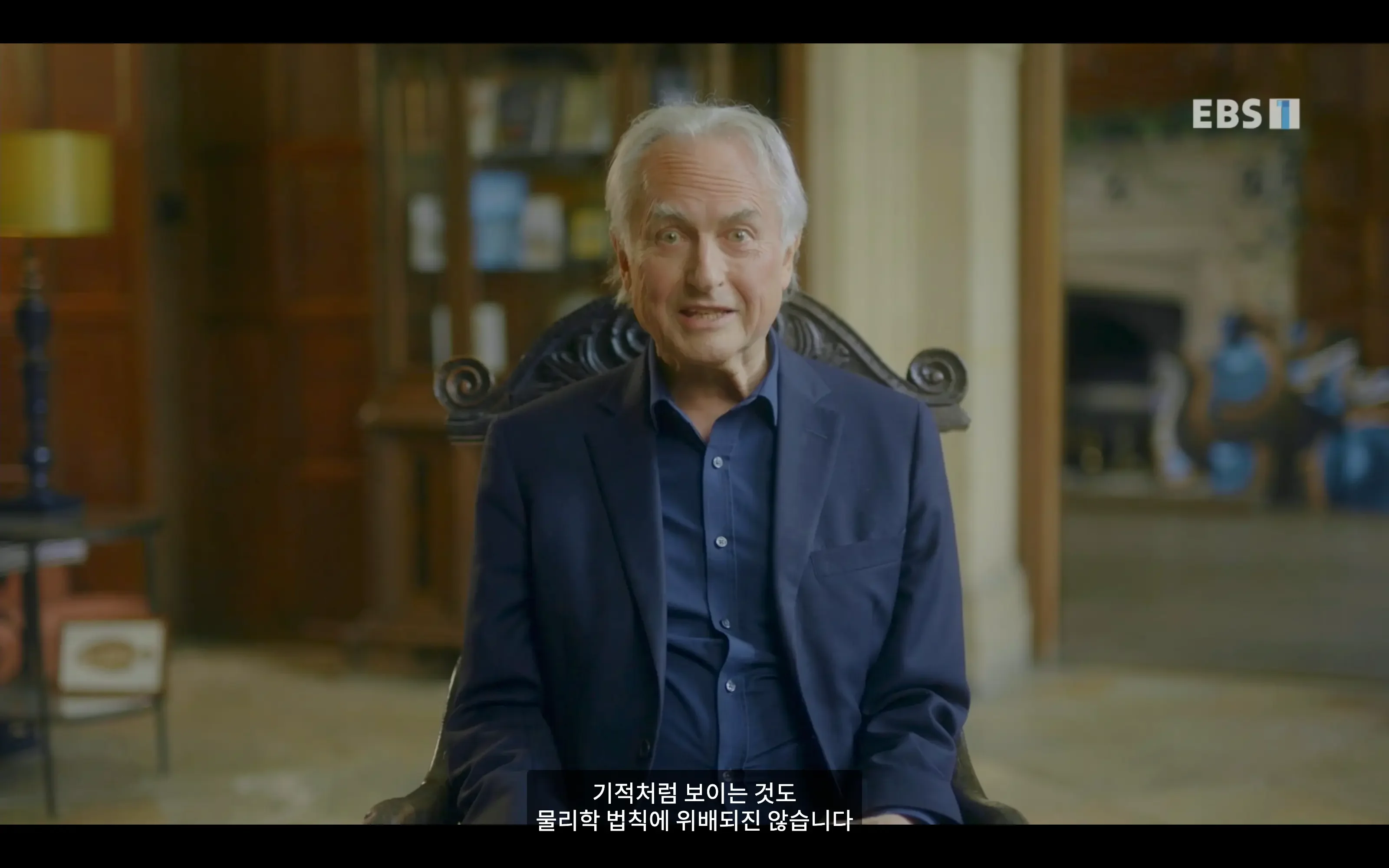
Why are myths supernatural?
Every people has their own unique myths, and myths created in different places believe different things about various phenomena. For example: What is the sun? What are stars? Why are there winter and summer? Why are there day and night? The myths that explain these questions are all different. Since most are myth-based explanations, they can't all be true.
Truth must be universal. That's why only scientific truth is true everywhere.
How does science explain reality?
Scientists observe their subjects. They use their senses or tools like telescopes and microscopes. Based on observations, we test ideas. Ideas come from our inspiration. In science, we get ideas and derive predictions. We sometimes build mathematical models. We verify predictions through observation and experimentation.
Accepting that we evolved from bacteria takes courage. This happened over billions of years.
I think we should boldly give up all gods.
— Richard Dawkins
How can we gain courage from science?
Science is a method of solving problems, so through scientific thinking we can move forward to protect our lives. We sustain our lives thanks to advances in medicine. We can also travel far distances through technology. There are so many reasons to explain why science matters.
Not just rainbows — everything becomes more beautiful when properly understood. Science cultivates a perspective that sees the world as beautiful.
Science is a source of wonder, and also essential.
To the soul standing at the edge of the Grand Canyon, thinking about the distant universe and vast spans of time, science is wondrous.
Science is truly heart-pounding magic.
— Richard Dawkins
Lecture 5 Summary#
Science -> The only way to explain reality; truth is universal when backed by scientific fact
- Observation using senses and tools
- Verify ideas through observation, reason through mathematical methods, verify
- Verify through experimentation (manipulating and changing things)
Science -> Giving courage to solve unsolved problems
e.g., Darwin -> Solved the problem of life's origin through natural selection
How scientific thinking has changed reality:
- Sustaining life
- Overcoming disease
- Life's conveniences
- Making everything we hope for possible
Average vaccine development takes 10-15 years -> COVID vaccine developed in under 1 year -> Science played a crucial role in COVID pandemic vaccine development, quarantine procedures, etc.
Science -> Wondrous and essential -> The inspiration science gives is more important than its utility
- The world looks more beautiful when phenomena are properly understood (poetic inspiration)
- Science leads us to a better life
It's important that people learn and enjoy science in diverse ways. If you enjoy science, your life will be enriched.
If you think you can, you can. And if you think you can't, you're right.
— Henry Ford